Why Alabama attics need this
Alabama splits cleanly down the middle and the fix has to read both halves. Down on the Gulf Coast around Mobile and Baldwin County, summer dew points park in the mid 70s for weeks, salt air drifts in off Mobile Bay, and the hurricane edge reaches the shoreline on a real schedule, with Sally washing across the Eastern Shore in 2020 as the most recent reminder. Up in North Alabama around Huntsville the air runs a touch drier, but spring drops into Dixie Alley territory, where the April 2011 tornado outbreak across Tuscaloosa and Madison County is still the storm everyone references when wind-rated mounting comes up. Birmingham and Hoover sit in the middle on Appalachian foothill ridges, where suburban hill geography keeps one slope of the roof in long afternoon sun while the other bakes through dinner.
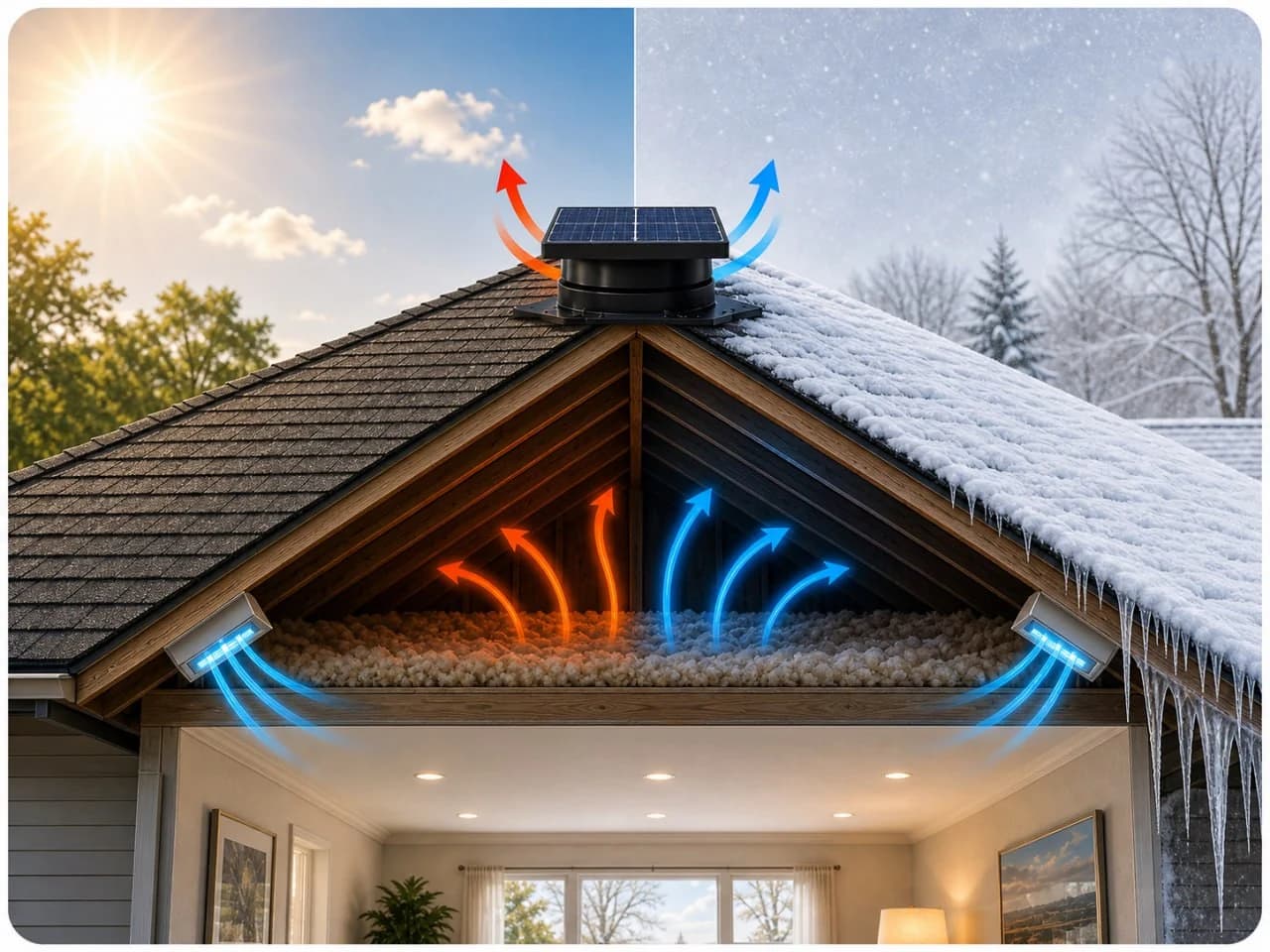
What ties all of it together is the same trapped attic. Probes in Mountain Brook and Hampton Cove routinely read 135°F to 140°F by 4pm in July. Insulation slows that load. It does not move it.
What we install
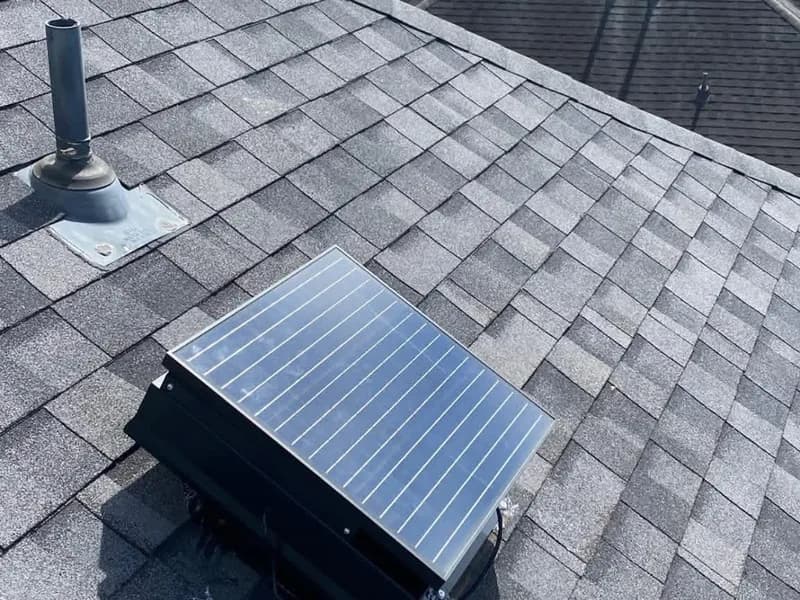
You get one 30W solar attic fan, sized for an Alabama home, paired with an authorized installer who handles the install. The solar panel is built into the housing. For Gulf Coast installs from Mobile out through Gulf Shores and Orange Beach we swap in a corrosion-resistant aluminum housing, because Mobile Bay salt air eats cheap steel fasteners inside a single summer. For North Alabama installs around Huntsville and Madison we tie the mounting to the Dixie Alley wind rating, not optional given the spring storm track.
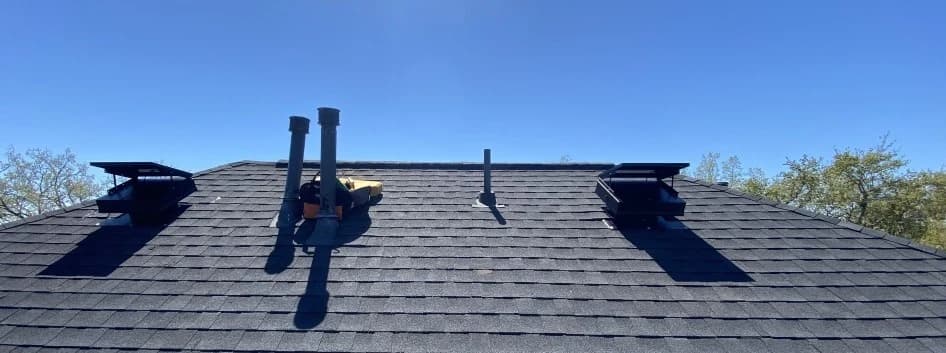
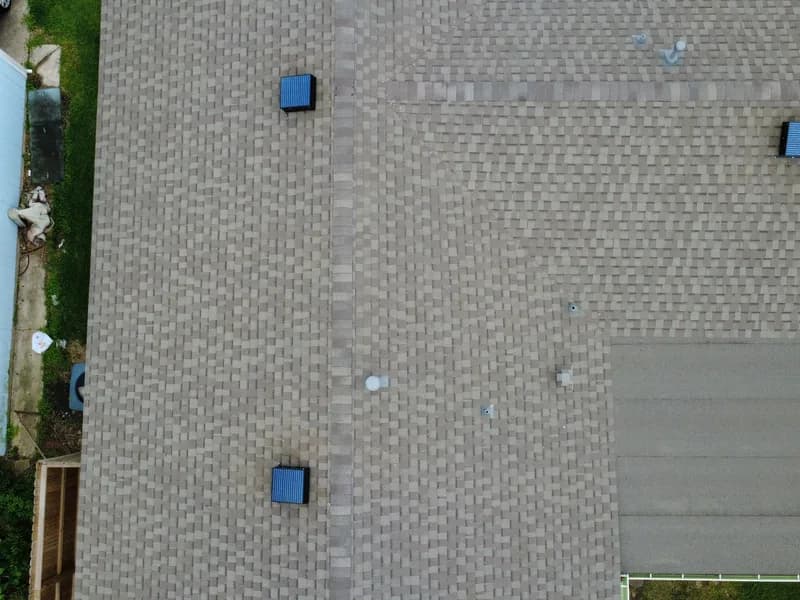
The installer puts the fan on the back slope so it stays hidden from the curb, which matters for the architectural review rules in newer Hoover, Vestavia Hills, and Madison HOAs. They cut a clean opening, seal it for wind-driven thunderstorm rain, run a thermostat and a humidistat, and tie off the flashing. Professional install in a single visit. No electrician, no new circuit.
What you'll save
The average Alabama home uses about 14,500 kWh per year, with the cooling load running from late April through September across most of the state and stretching into October along the Gulf Coast. A typical summer bill in Birmingham, Huntsville, or Mobile sits near $220 on Alabama Power or TVA-fed rates, and a real piece of that is your AC fighting humid attic air pushing down through the bedroom ceilings.
Owners who put a solar attic fan on an Alabama home usually see a 15 to 25 percent drop in summer cooling cost (per U.S. Department of Energy residential cooling-load guidance). On a $220 August bill, that is $33 to $55 back that month. The story reads differently north to south. Along the Gulf Coast the humidistat does as much work as the thermostat, pulling Bay-side moisture off the joists before it feeds mildew. In the foothill belt around Birmingham and Hoover the headline is straight cooling savings on west-facing ridge slopes. Up around Huntsville the bigger payoff is shingle life, because Tennessee Valley attics cook the deck plywood through long July afternoons even when the dew point breaks.
Real Alabama install scenarios
Mobile, Spring Hill neighborhood. A 1950s low-country single about four miles inland from Mobile Bay, with a metal seam roof patched after Sally rolled through in 2020. The owner kept her thermostat at 76°F but the back master sat at 84°F by 6pm and her July Alabama Power bill had climbed to $263. Attic probe read 139°F at 4pm on a 92°F afternoon, and the back hall closet smelled musty from Bay-side humidity. The installer used coastal-grade aluminum mounting tied to the Mobile County hurricane wind zone, set the fan on the rear slope facing away from the Bay, and the humidistat carried most of the load. Within ten days the probe read 110°F at the same hour, and the closet smell was gone by week two.
Huntsville, Hampton Cove. A newer two-story brick traditional east of Monte Sano in a Madison County HOA, sitting on a ridge that catches a long afternoon sun window across the Tennessee Valley. The owner had lived through the April 2011 outbreak and was specific about wind-rated mounting before the crew showed up. Attic probe read 134°F on a 91°F afternoon, and the bonus room over the three-car garage sat at 85°F by 7pm. We tied the mounting to the Dixie Alley severe-storm rating, routed placement past the HOA, and set the fan on the rear slope below the ridge. A week later the bonus room finally hit setpoint before 9pm.
Tuscaloosa, Lake Tuscaloosa neighborhood. A 1990s lakeside two-story with composite shingles and long western exposure across the water. The complaint was specific. Upstairs bedrooms hit 86°F by mid-afternoon in late September, and the AC could not keep up with a 132°F attic. We placed the fan on the rear slope where the lake-side sun window was longest, added a humidistat for the river-air load, and the probe read 109°F by week two. His September Alabama Power bill came in $38 lower year over year.
Installed by Alabama authorized installers
Newer HOAs in Hoover, Vestavia Hills, and Madison have placement covenants so the unit cannot be seen from any street-facing slope. Our installers default to back-slope placement, which clears almost every covenant we have seen. Gulf Coast homes from Mobile through Gulf Shores get coastal-grade mounting tied to the hurricane wind zone, and North Alabama installs around Huntsville use Dixie Alley severe-storm rated hardware.