Why Washington attics need this
The Washington summer attic gets badly under-pitched. Seattle's average July high sits around 79°F, but the attic does not run off the outside number. Under dark asphalt shingles in direct afternoon sun, the deck routinely climbs to 115°F on plain July days. On the now-familiar Seattle and Vancouver heat waves where the outdoor air pushes 100°F to 108°F, we have pulled probe readings of 130°F in attics from Wallingford to Bellevue. That heat radiates straight down through the ceiling drywall into the bedrooms below, all evening long. Washington homes are not built for AC the way Texas homes are, so the upstairs sits 10°F to 15°F hotter than downstairs from late June through September, and during a heat dome it gets dangerous.
The winter side is the second pitch, and west of the Cascades it is a serious one. Seattle averages 152 days of measurable rain a year. Tacoma is close behind. From October through May, that wet air pushes up into your attic through soffit vents, gable openings, and every gap your roof has. Inside the attic it meets warm house-air rising from showers, cooking, and laundry, hits the cool underside of the roof deck, and condenses. North-facing slopes grow thick mats of moss within five years. Algae streaks discolor the shingles. The wood deck stays wet, the nails rust, and the shingles curl. Insulation absorbs moisture and goes flat. Mold shows up on the north gable wall or behind the chimney chase. A mold-remediation quote in King or Pierce County runs $3,000 to $10,000. A premature reroof because the deck rotted from below runs $14,000 to $22,000.
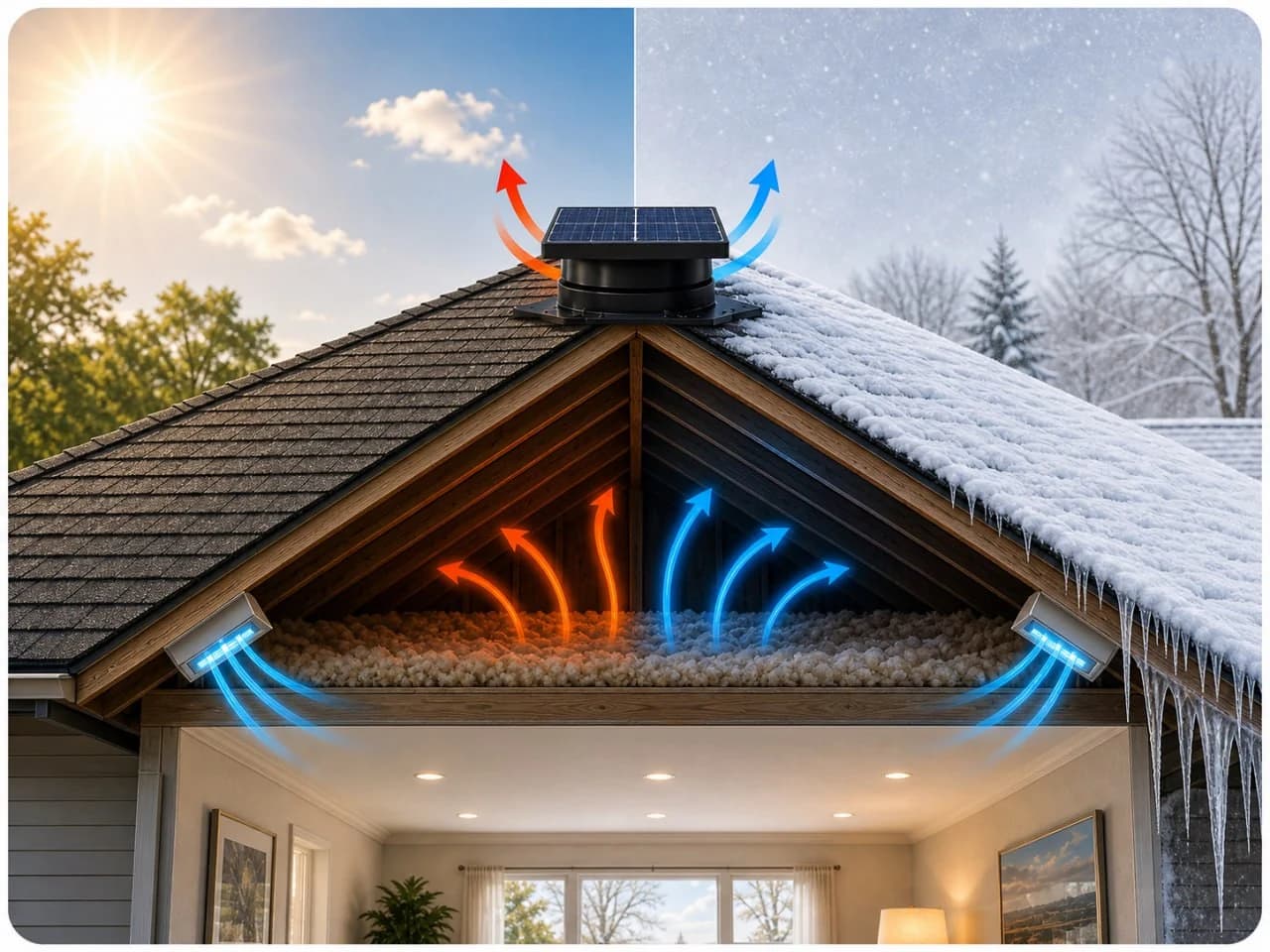
A solar attic fan does both jobs on one piece of equipment. In a July heat wave it moves the trapped 130°F air out and cools the deck dramatically, which matters most during the days that hospitalize people. In November it keeps pulling moist air out before it can condense on the deck. Western Washington summers are actually quite sunny, and the panel runs at full output most days from June through September. Sun runs it year-round. No operating cost added to your bill, which matters because Washington's average home runs about 11,600 kWh per year on mostly electric heat.
What we install
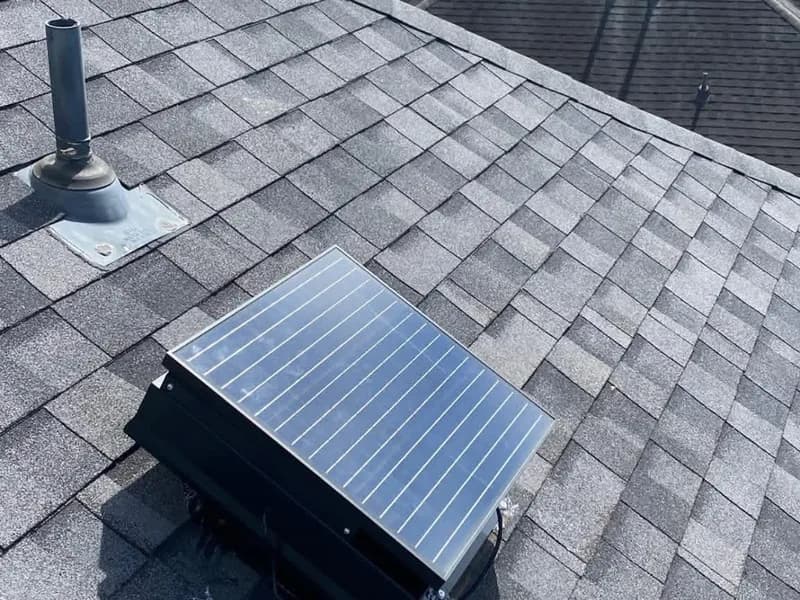
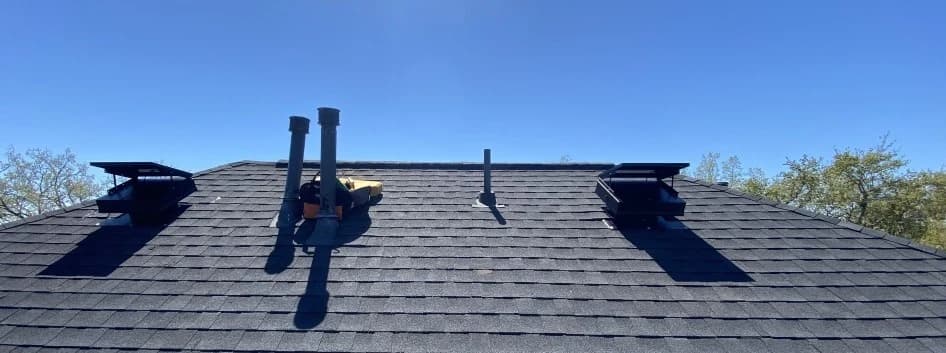
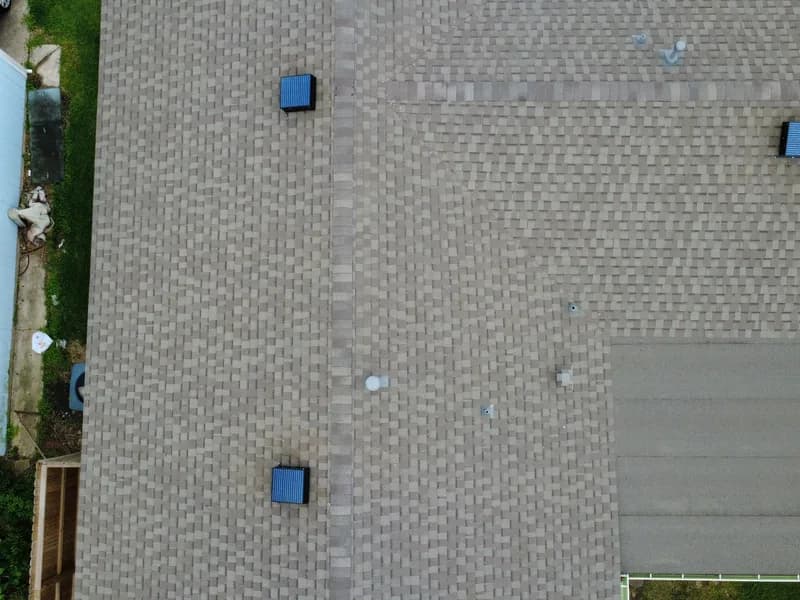
One 30W solar attic fan with the panel built into the housing, set on the back slope where it does not show from the street. The installer cuts a clean opening, flashes it for Washington's near-constant rain, runs a humidistat in the attic (the variable that actually matters here, more than temperature), and is back off the roof in a single visit. No electrician. No new circuit. No operating cost added to your bill.
About wildfire smoke. Late August and September can bring a week or two of heavy smoke from eastern Washington or Oregon fires. The fan has a manual cutoff for exactly that situation. Switch it off, wait out the smoke, switch it back on. The other fifty weeks of the year it does what it is supposed to do.
What you'll save
Summer cooling is the first dollar win, and on heat-dome days it is also a safety win. The average Washington summer bill sits around $110 in July, and a solar fan trims 8 to 15 percent off summer cooling cost (per U.S. Department of Energy residential cooling-load guidance), which is $9 to $17 a month back from June through September. The bigger summer payoff is comfort. The upstairs becomes usable again because the ceiling stops radiating attic heat down into the bedrooms, and during a heat wave that is the difference between sleeping and not sleeping in a home with no AC.
The other wins stack on top. A mold-remediation job in a Seattle or Bellevue attic runs $3,000 to $10,000. An early reroof because the deck rotted from underneath runs $14,000 to $22,000 on a typical home. Wet insulation drives your winter heat bill up by 15 to 25 percent because it stops working. Shingles in a properly ventilated attic last 5 to 10 years longer in this climate before moss and trapped moisture eat them from below.
Real Washington install scenarios
Wallingford in Seattle. A 1924 craftsman with a new shingle roof and a beautifully air-sealed attic floor. Sealed so well the moist house-air had nowhere to go. By the second winter the owner saw black mold streaks on the underside of the deck and a remediation contractor had quoted $7,200. The installer added the solar fan on the back slope with a humidistat. Two months later the deck was dry, the streaks had stopped, and the remediation job was cancelled.
Tacoma Old Town. A 1908 home overlooking Commencement Bay with original framing under two layers of composite shingles. North slope was solid green moss. The attic smelled like a damp basement and the owner had been told to expect mold within five years. We placed the fan on the back slope and the owner cleared the moss off the front a month later. By spring the attic smelled neutral, and the moss did not regrow at the usual rate because the deck stayed dry from below.
Edgemoor in Bellingham. A 1995 view home with vaulted ceilings, several roof planes, and stingy venting. The owner had a recurring wet spot at the corner of the master bedroom ceiling that two contractors had failed to fix because it was not a leak, it was condensation. We placed the fan on the back slope above the master and added the humidistat. The wet spot dried out in two weeks and has not come back in three winters.
Installed by Washington authorized installers
Washington housing runs the full range. Pre-1940 in central Seattle, Tacoma, and Olympia. 1960s and 1970s ranches across the Eastside and the south Sound. 1990s-on builds in Sammamish, Issaquah, Redmond, and Spokane Valley. Older homes have venting designs that made sense before modern insulation. Newer homes often have impressive air-sealing but no real moisture exhaust. Our installers know how to read which problem your house has. Back-slope placement keeps the unit invisible from the street, which clears every Mercer Island, Bellevue, and Sammamish HOA rule we have dealt with.
You pick a date, the installer shows up, and your attic finally stops holding water.