Why Rhode Island attics need this
The Rhode Island summer attic does not get talked about enough. The state's average July high is around 82°F, but the attic does not run off the outdoor number. Under dark shingles in full afternoon sun, the deck cooks to 128°F or 130°F on plain July afternoons. We have pulled probe readings of 130°F in Providence, Warwick, and Newport attics when the outside air was only 84°F to 88°F. Coastal humidity makes it worse, because warm wet attic air condenses on cooler ductwork inside, and that moisture load slows down every kind of ventilation that is not powered. Heat radiates straight down through the ceiling drywall into the bedrooms below, all evening long, and the top floor sits 10°F to 15°F hotter than the first.
The winter side is the second pitch. Indoor humidity from showers, cooking, and breathing rises into the attic and freezes on the underside of the deck. When it thaws, it drips into the insulation. At the same time, warm attic air melts snow on the shingles from below, the melt runs down to the freezing eaves, and refreezes into a ridge of ice. The next melt pools behind that ridge and pushes water up under the shingles into your top-floor ceiling. Providence-area adjusters see this claim from January through March every year.
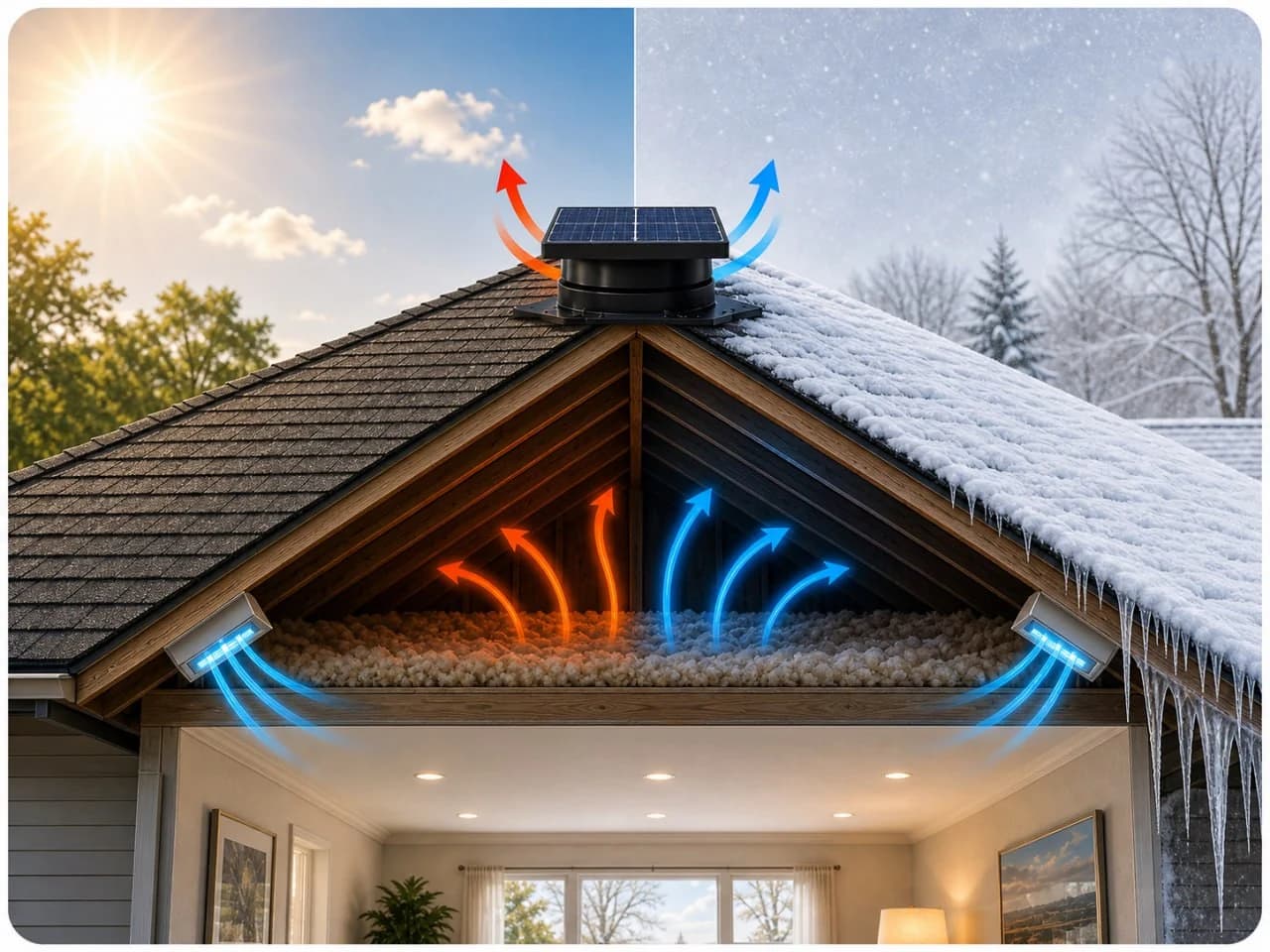
A solar attic fan does both jobs on one piece of equipment. In July it moves the trapped 130°F air out and cools the deck dramatically. In February the panel is making power the moment the sun clears the snow, and the fan is pulling moist air out before it freezes on the deck. Sun runs it year-round. No operating cost added to your bill.
What we install
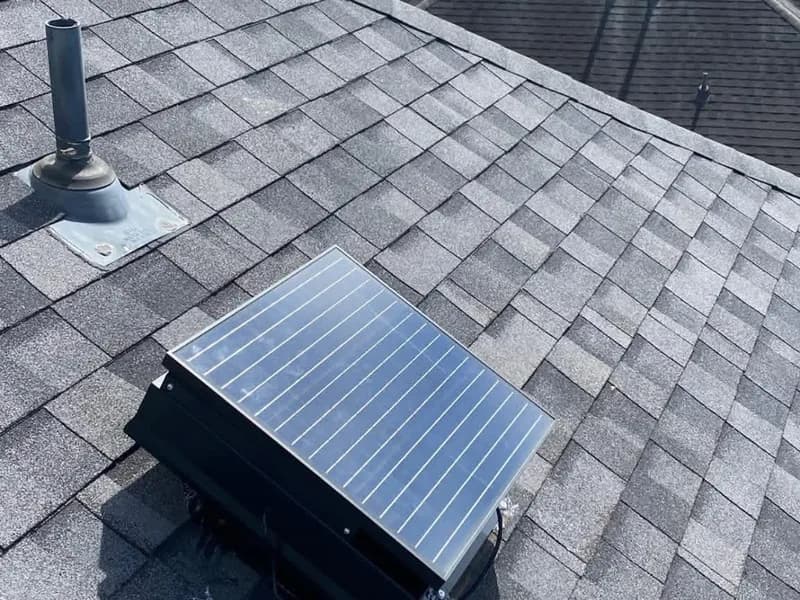
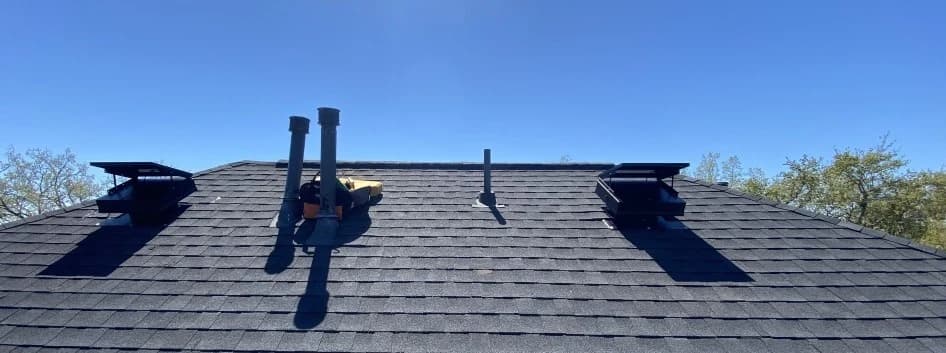
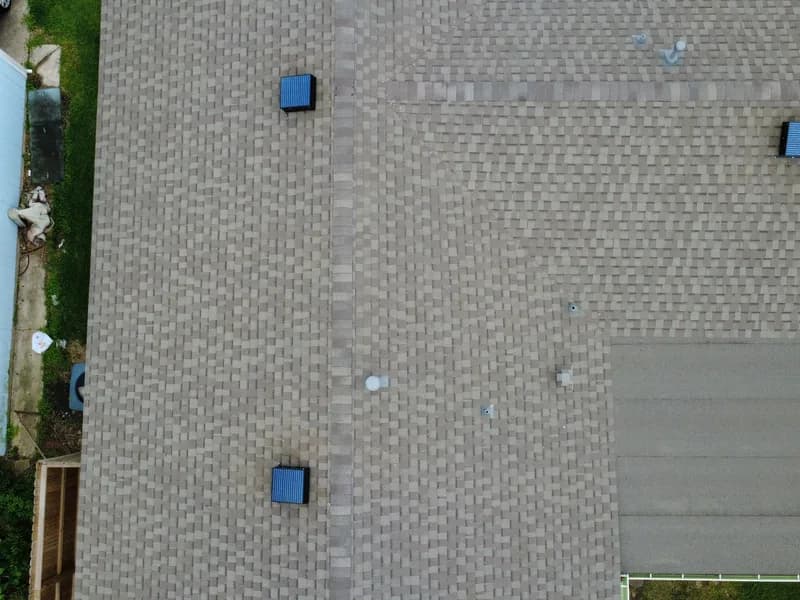
You get one solar attic fan and a Rhode Island authorized installer who does the install. The unit is a 30W solar fan with the solar panel built into the housing. It mounts on the back slope of your roof so it does not show from the curb, which matters in Newport, College Hill, and East Side Providence historic neighborhoods. The installer cuts a clean opening, flashes it for Nor'easter wind-driven rain, runs a thermostat and a humidistat, and ties it off.
Professional install in a single visit. No electrician. No new circuit. No operating cost added to your bill. The sun runs the fan.
What you'll save
Summer cooling is the first dollar win. The average Rhode Island home uses about 7,100 kWh per year and a typical RI summer power bill sits around $175 in July. A solar fan trims 8 to 15 percent off summer cooling cost (per U.S. Department of Energy residential cooling-load guidance), which is $14 to $26 a month back from June through August. The bigger summer payoff is comfort. The top-floor bedroom becomes usable again because the ceiling above stops radiating attic heat down into the room.
The other wins stack on top. Shingle life on a deck that is not cooking at 130°F all summer and refreezing all winter extends five to ten years. Ice-dam interior damage in Rhode Island commonly runs $4,000 to $10,000 per claim. Mold remediation when wet insulation goes too long runs $3,000 to $8,000. And because your insulation stays dry, your winter heat bill drops too.
Real Rhode Island install scenarios
College Hill, Providence. A 1890 Federal-style on a steep east-facing lot above Benefit Street. The third-floor bedroom kept getting brown rings on the ceiling every March, and the home inspector had flagged condensation on the back-slope rafters. Soffit venting was nonexistent. We mounted the solar fan on the back slope where it would not be visible from the historic-district view, and the installer cut in new soffit vents to feed the intake side. Next winter, no stains. By summer the upstairs bedroom felt usable past 8pm for the first time.
Newport, off Bellevue Ave. A 1920s shingle-style summer-converted-to-year-round home with chronic moisture on the rafters from the constant Sound humidity. The owners ran a dehumidifier in the attic from May through October. Install went on the back slope where the panel caught afternoon sun. The dehumidifier ran maybe three days that following August. By the next spring inspection, the rafters were dry to the touch.
Warwick, near the airport. A 1955 raised ranch with a low-pitch roof and a long flat run that never vented well. The owner kept getting ice ridges along the entire front gutter line every February. We placed the solar fan high on the back slope to maximize draw across the long run, and we added a humidistat so it would keep working through wet thaw cycles. Next winter, the ridge of ice did not form. Owner's August bill dropped from $190 to $151.
Installed by Rhode Island authorized installers
Rhode Island has a lot of old framing. Providence, Pawtucket, and the East Bay towns are full of 1880-to-1920 housing with original wood decks under modern asphalt. Original soffit venting either never existed or has been painted shut by a century of repaints. Our installers always look at the intake side before they ever cut for a fan, and they will tell you straight if the soffits need work before the fan can do its job.
Newport, the Providence East Side, Wickford, and Bristol historic districts have placement rules. Back-slope mounting clears almost every one. You pick a date, the installer shows up, and the attic stops holding sea moisture against your insulation.