Why Indiana attics need this
Indiana sits in a humidity corridor that pulls Gulf air straight up the Wabash and Ohio valleys from June through September, and most owners underestimate how hard that lands on a poorly vented attic. A typical Indianapolis or Carmel attic probe reads 130°F to 135°F by 4pm on a 90°F July afternoon. Down in Evansville the Ohio River bottom holds the heat into the night, and an older 1920s home in the Lincolnshire neighborhood can sit at 86°F in the upstairs bedrooms at midnight with the AC running hard. Up in South Bend and Fort Wayne the summer is shorter but the humidity is still serious, and the older housing stock has thinner roof framing that lets attic heat radiate down through the ceiling drywall fast.
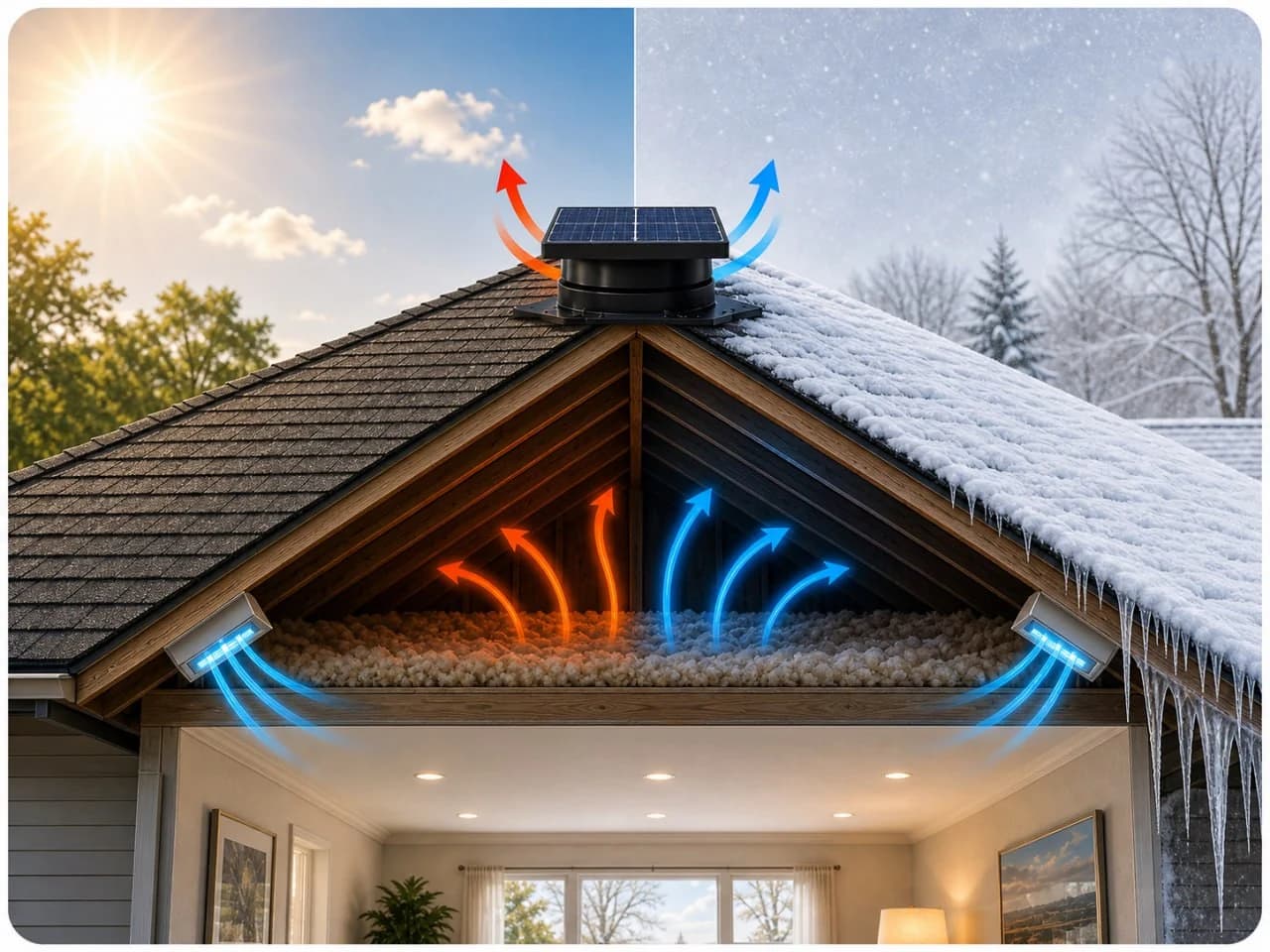
The winter side is where Indiana attics quietly take damage. Conditioned air leaks up into the attic, hits a cold roof deck, and condenses on the plywood. Up in South Bend and Elkhart, the same warm air melts the underside of the snowpack on the roof, the meltwater runs to the cold eave, refreezes, and you have an ice dam backing water under the shingles into the ceiling. Freeze-thaw cycles around Indianapolis do this two or three times a winter on the wrong eave, and the northern third of the state gets it worse.
A solar attic fan runs year-round because it is solar-powered, not seasonal. In August it pulls humid Wabash Valley heat out of a Broad Ripple attic. In February when there is sun on the panel it pulls the warm moist house air out before it has a chance to condense on the deck or feed an ice dam.
What we install
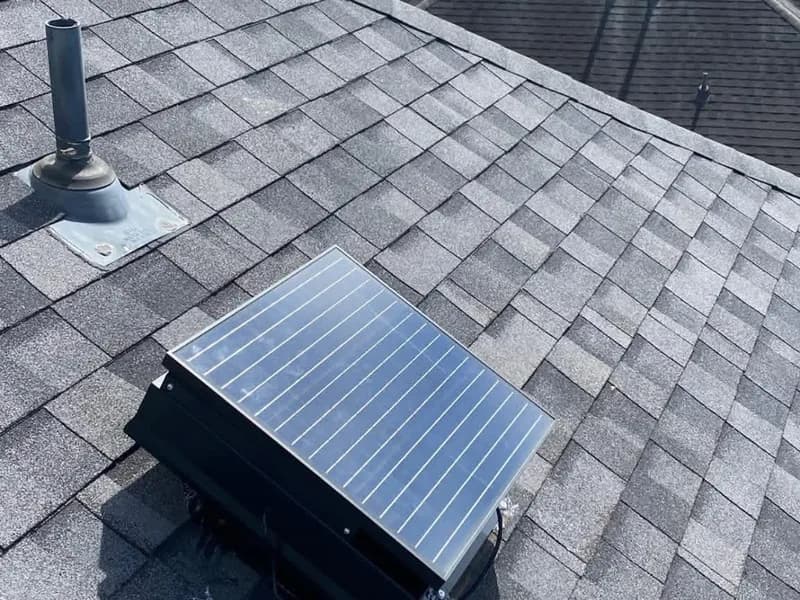
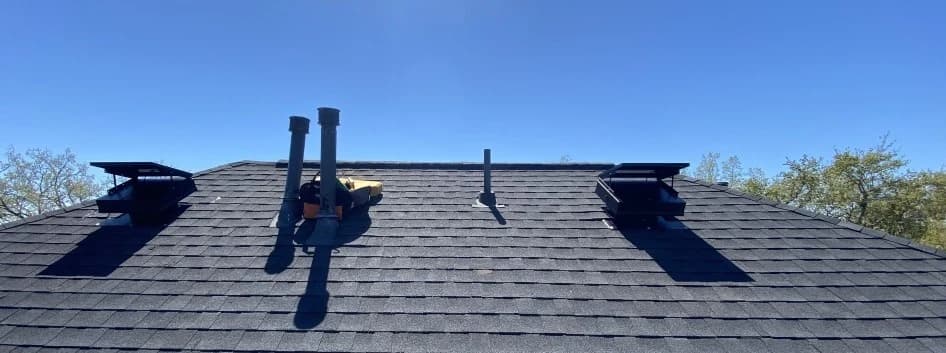
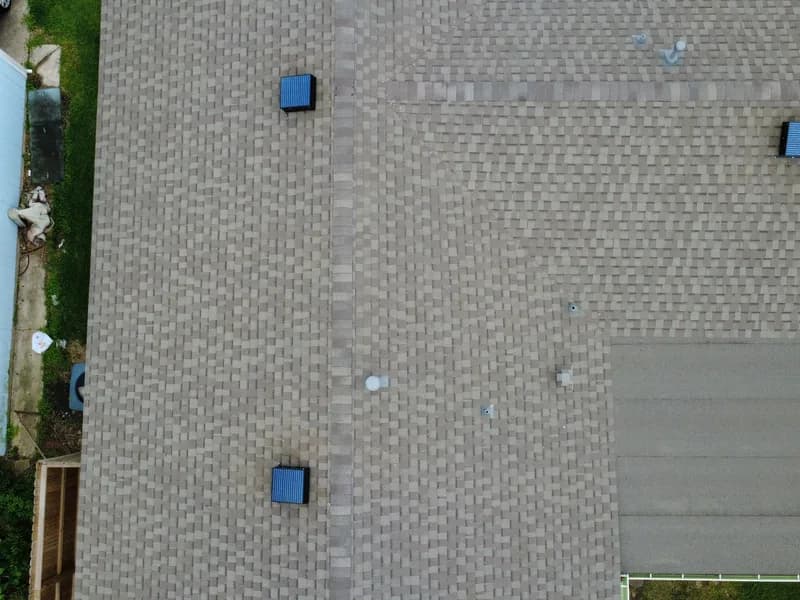
You get one 30W solar attic fan, sized for an Indiana home, paired with an authorized installer who handles the install. The solar panel is built into the housing. The motor is sealed against humid Midwest air so it does not corrode out the way a cheap turbine motor does after a few summers. The installer mounts it on the back slope so it does not show from the curb, cuts a clean opening, seals the flashing tight against the kind of derecho-driven rain Indiana sees every couple of summers, and ties in a thermostat and a humidistat.
Professional install in a single visit. No electrician, no new circuit, no operating cost added to your bill. Sun hits the panel, the fan spins, and trapped attic air moves out. When the sun drops or a thunderstorm cell rolls through, the fan rests. The next humid Indiana afternoon it goes back to work.
What you'll save
The average Indiana home uses about 12,200 kWh per year, with the cooling load stacked from late May through September. A typical Indiana summer power bill in Indianapolis or Fort Wayne sits near $170 in July or August, and a real share of that is your AC dragging hot wet attic air down through the ceiling drywall.
Owners who install a solar attic fan in Indiana usually see a 10 to 20 percent drop in summer cooling cost (per U.S. Department of Energy residential cooling-load guidance). On a $170 August bill, that is $17 to $34 back that month. The harder-to-quantify wins matter as much as the cooling savings. Cooler shingles last longer, and 135°F deck temps quietly shorten a 25-year shingle to 18 years on the south face. A drier winter attic means no ice damming damage on the eaves in South Bend or Fort Wayne, no soaked blown-in insulation losing R-value, and no mold on the rafters by April.
Real Indiana install scenarios
Indianapolis, Broad Ripple. A 1925 bungalow off College Avenue with original soffit vents and a 17-year-old asphalt roof showing curl on the south face. The owner kept her thermostat at 74°F but the upstairs back bedroom never dropped below 85°F until past midnight, and her August AES Indiana bill had hit $221. Attic probe read 133°F at 4pm. The installer set the fan on the back slope where the late-afternoon sun window was longest, added a humidistat, and within ten days the back bedroom tracked the rest of the house by 9pm. Her September bill came in $39 lower than August.
South Bend, Sunnymede. A 1940s brick Tudor off Jefferson Boulevard with a steep slate-look asphalt roof and a winter ice-dam history on the north eave above the kitchen that had stained the ceiling three winters running. Probe read 128°F on a 88°F July afternoon. We placed the fan on the back slope above the rear addition, well below the ridge so it cleared the Sunnymede neighborhood architectural guidelines, and tied in a humidistat. By the following February the north eave stayed clear through three snow events and the kitchen ceiling stain stopped getting wider.
Carmel, West Carmel. A 2000s colonial inside a Hamilton County HOA with strict architectural review on any roof-mounted equipment. Attic probe read 131°F on a 91°F July afternoon, and the upstairs bonus room above the three-car garage sat at 86°F at 9pm. We routed placement past the West Carmel architectural committee, set the fan on the rear slope above the bonus room itself, and the room dropped from 86°F to 78°F at bedtime inside a week. The same fan kept the attic deck dry through a heavy late-January storm.
Installed by Indiana authorized installers
Hamilton County HOAs in Carmel, Fishers, and Westfield all have placement rules for any roof-mounted equipment. Our installers default to back-slope placement well below the ridge, which clears almost every HOA and historic district rule we have seen, including the Meridian-Kessler and Old Northside historic guidelines in Indianapolis and the Sunnymede architectural standards in South Bend. Installers in the northern third of the state know the ice-dam pattern cold and will check your eave flashing and gutter pitch while they are up there.
You pick a date, the installer shows up, and your attic stops cooking in July and stops sweating in January.