Why Pennsylvania attics need this
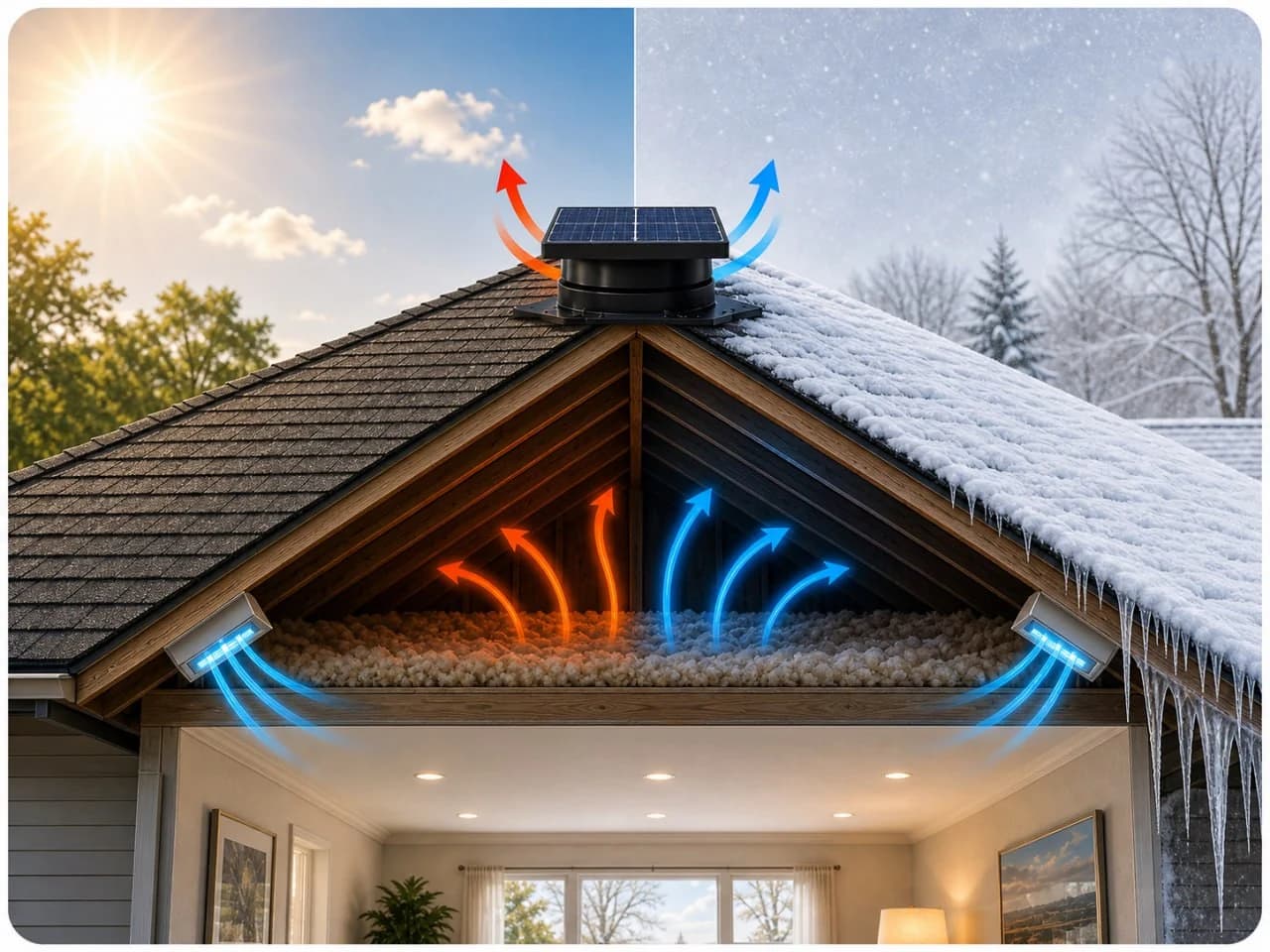
The Pennsylvania summer attic gets ignored, and it should not. The state's average July high is around 84°F, but the attic does not work off the outdoor number. Under dark asphalt shingles in full afternoon sun, the deck routinely hits 130°F to 134°F. We have pulled probe readings of 134°F in Philadelphia row houses, Pittsburgh four-squares, and Lancaster farmhouses when the outside air was only 88°F. That heat radiates straight down through the ceiling drywall into the bedrooms below, all evening long. A South Philly trinity or an Allentown cape can sit 10°F to 15°F hotter upstairs than downstairs from late June through August. Your AC fights it. Your PECO, Duquesne, or PPL bill pays for the fight.
The winter side is the second pitch. When warm indoor air leaks into the attic, it heats the deck, snow on top melts, runs to the cold roof edge, and refreezes into a wedge of ice along the gutter. The next thaw pools behind the ice and gets pushed up under the shingles into your ceiling. At the same time, indoor moisture from showers and cooking rises into the attic and freezes on the deck. From Erie to Scranton to the Main Line, this is the single biggest source of winter roof claims in the state.
A solar attic fan does both jobs on one piece of equipment. In July it moves the trapped 134°F air out and cools the deck dramatically. In February the panel is making power the moment the sun clears the snow, and the fan is pulling moist air out before it freezes on the deck. Sun runs it year-round. No operating cost added to your bill.
What we install
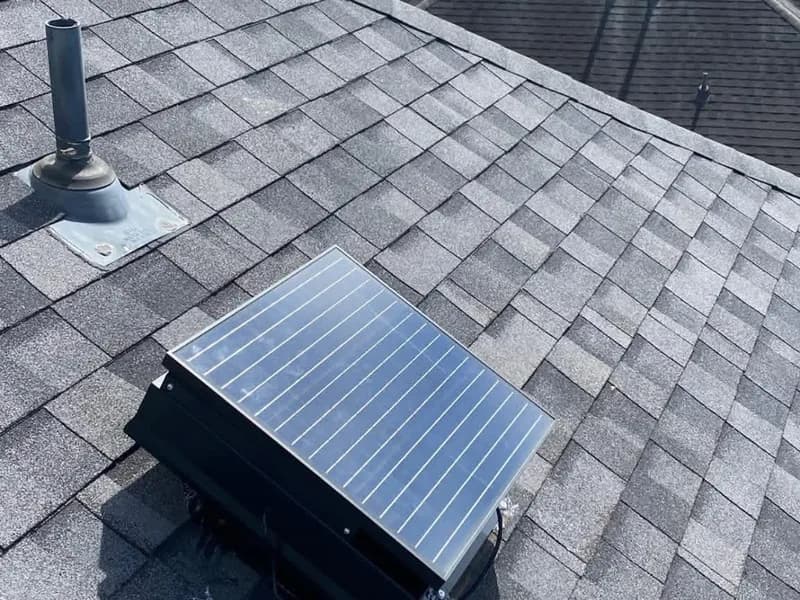
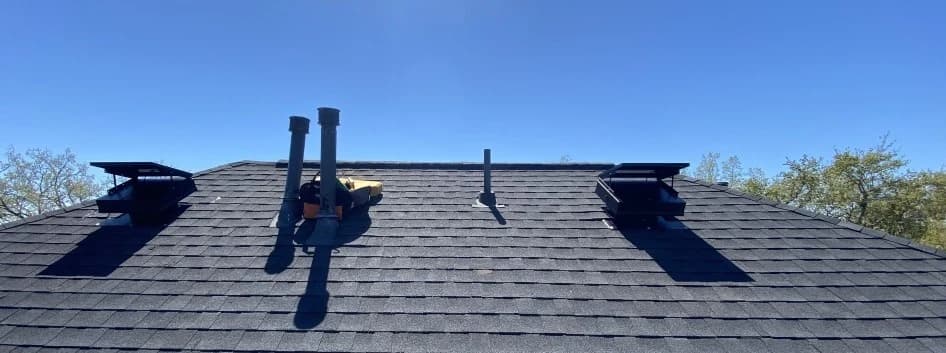
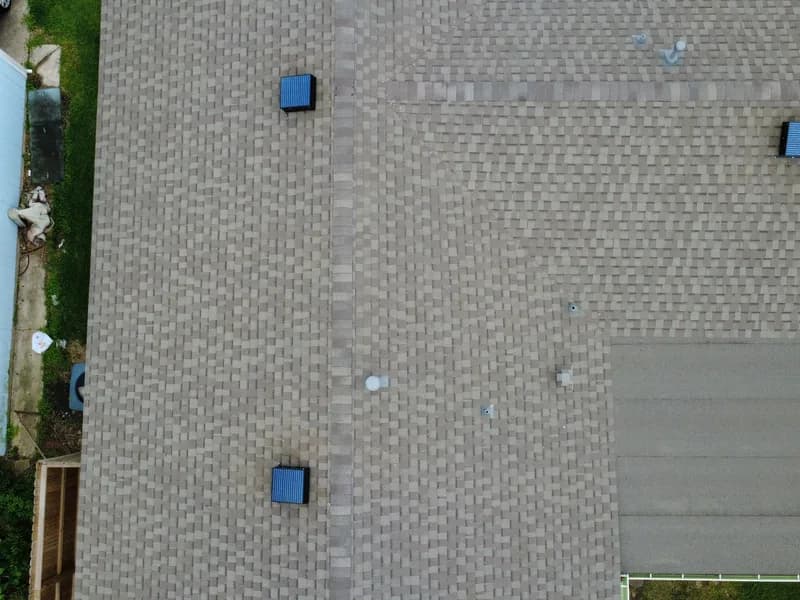
You get one solar attic fan paired with an authorized installer who handles the install. The unit is a 30W solar fan with the solar panel built into the housing. It mounts on the back slope so it does not show from the curb, which matters in older Philadelphia neighborhoods, the borough sections of Pittsburgh, and stricter HOAs on the Main Line. The installer cuts a clean opening, flashes it for wind-driven rain, runs a thermostat and humidistat, and finishes the tie-in.
Professional install in a single visit. No electrician needed. No operating cost added to your bill. The sun runs it.
What you'll save
Summer cooling is the first dollar win. The average Pennsylvania home uses about 9,300 kWh per year, on the lower side because so much of the state heats with gas, and a typical PA summer power bill sits around $155 in July. A solar fan trims 8 to 15 percent off summer cooling cost (per U.S. Department of Energy residential cooling-load guidance), which is $12 to $23 a month back from June through August. The bigger summer payoff is comfort: the upstairs becomes usable again because the ceiling stops radiating attic heat down into the bedrooms.
The other wins stack on top. Shingle life on a deck that is not cooking at 134°F in August and refreezing in February extends five to ten years. PA ice-dam claims commonly run $3,500 to $9,000. Mold remediation when wet insulation goes too long runs $3,000 to $8,000. And because dry insulation actually insulates, your gas heating bill comes down too.
Real Pennsylvania install scenarios
Squirrel Hill, Pittsburgh. A 1925 brick four-square with a steep slate-converted-to-asphalt roof. The owners had ice dams at every dormer two winters running and the third-floor bedroom kept smelling musty in July. Original gable vents were the only intake. We placed the solar fan on the back slope above the rear porch and opened up the soffit on the underside of the eaves. Next winter, no dams. The musty smell was gone by the end of August.
South Philly row house, Passyunk neighborhood. A narrow 1910 trinity-style row with a flat-pitched mansard on the front. The top-floor bedroom was unusable from late June through August, and the kitchen ceiling below the back addition kept showing water stains every February thaw. Install went on the back slope where the shorter pitch faces a clean afternoon sun window. By the next March thaw, no new stains. Owner's August electric bill dropped from $175 to $134.
Allentown west end. A 1940s cape with a finished knee-wall upstairs and chronic condensation issues on the rafters. The home inspector flagged early-stage mold on the north-side deck before the family bought it. We installed the fan high on the back slope above the dormer line. Within six weeks the rafters were dry to the touch. The family ran their attic dehumidifier maybe twice that whole winter instead of constantly.
Installed by Pennsylvania authorized installers
Pennsylvania has some of the oldest housing stock east of the Mississippi. Pittsburgh hillside homes, Philly row houses, Lancaster farmhouses, and Bethlehem mill houses are routinely 90 to 120 years old. Their original framing was never built with modern ventilation math in mind. Soffit vents, where they exist, are often painted shut or buried under blown-in insulation. Our installers know how to check the intake side before they ever cut for the fan, and they will tell you straight if the soffits need work too.
Philly historic districts (Society Hill, Old City, Rittenhouse) and several Main Line townships have roof placement rules. Back-slope mounting clears almost every one of them. You pick a date, the installer shows up, and the attic stops driving your winter claims.