Why Michigan attics need this
People think Michigan summers are mild. The outside thermometer agrees. Detroit and Grand Rapids both average highs around 83°F in July. But that number lies about what is happening above your ceiling. Dark asphalt shingles on a Michigan home soak up the long summer sun from May through September and the deck under them hits 130°F or more even on an 80°F day. Add Great Lakes humidity and the air in your attic turns into a wet oven. You feel it in the upstairs bedrooms after 4pm. Your AC runs longer than it should. Your power bill quietly climbs.
Then winter shows up. Lake-effect snow piles on the roof for months. The attic stays cold but the warm moist air from showers, cooking, and breathing rises into it and condenses on the cold deck. That moisture rots sheathing, soaks insulation flat, and feeds the freeze-thaw cycle at the eaves that creates ice dams. Most Michigan homeowners who pay $4,000 to fix an ice-dam leak in February did not have a venting problem in February. They had one all year and only noticed when the meltwater pushed under their shingles.
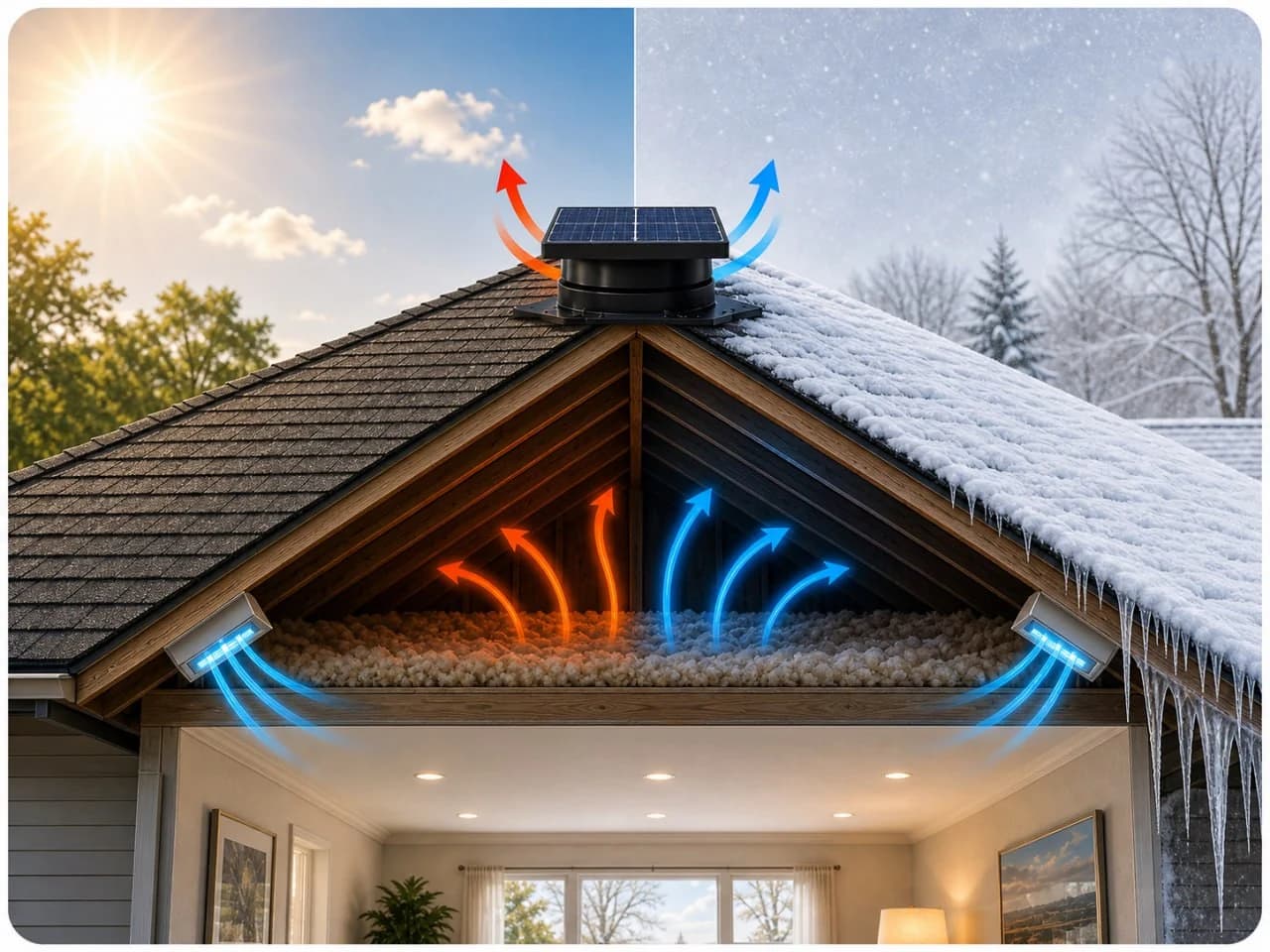
A solar-powered attic fan turns over the air whenever the sun is up. In July it pulls 130°F heat out before it cooks your ceiling. In a bright February afternoon it pulls warm moist house-air out before it can condense and freeze. Same fan. Two seasons of work. No operating cost added to your bill.
What we install
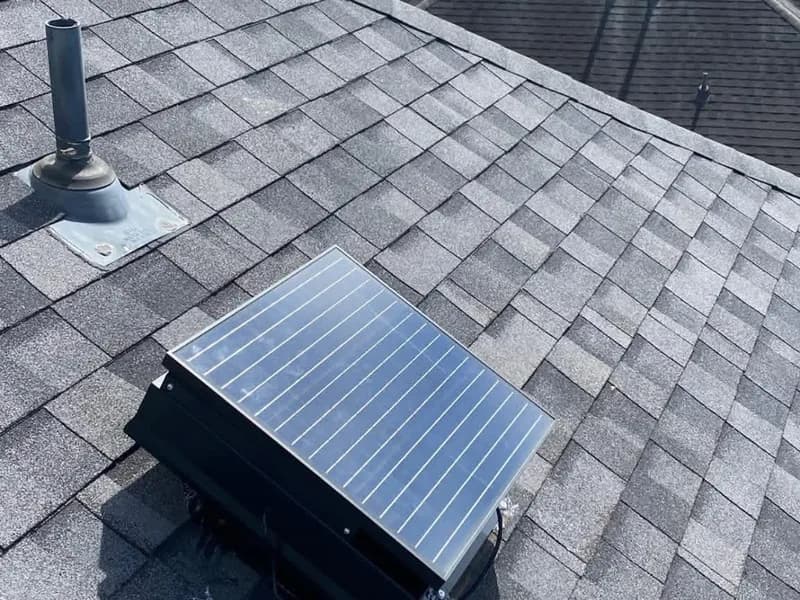
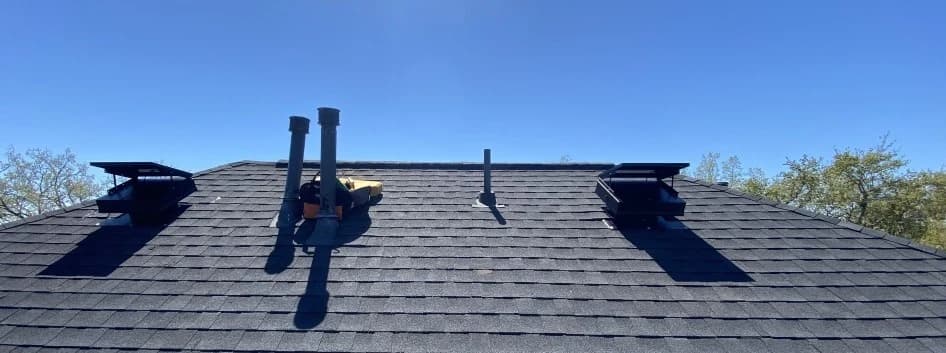
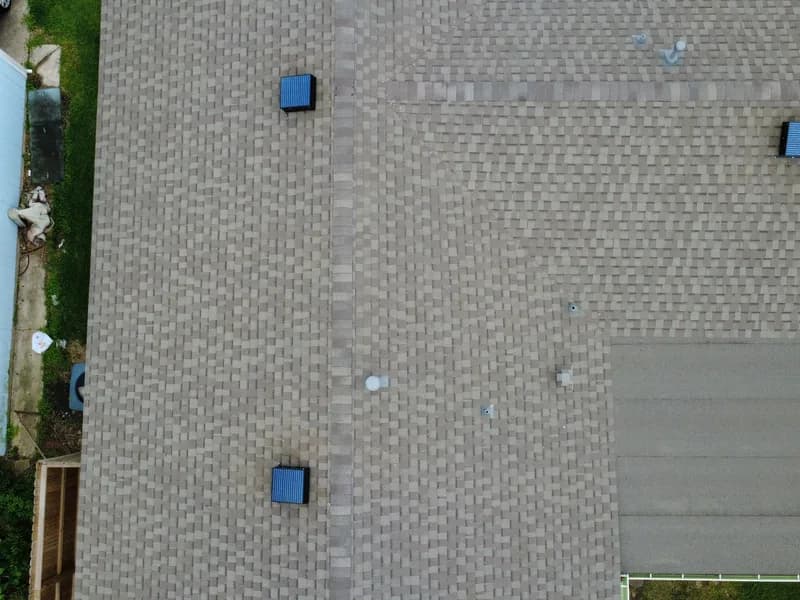
A 30W solar attic fan with the panel built into the housing, mounted on the back slope so it does not show from the street. The authorized installer cuts a clean opening, flashes it for Michigan winter water, wires the thermostat and humidistat in the attic, and is off your roof in a single visit. No electrician. No new circuit. No operating cost added to your bill.
What you'll save
The average Michigan home uses about 7,800 kWh per year. Summer power bills sit around $135 in July and August, lower than the hot-summer states because the AC season is shorter. The cooling savings on that bill run 10 to 18 percent, so call it $14 to $24 a month from June through September.
That is not the biggest number. The biggest number is the ice-dam repair that does not happen. A typical Michigan ice-dam leak costs $2,500 to $6,000 once you add roof patching, drywall, insulation, and paint. A drier attic also keeps your blown-in insulation lofted, which keeps your furnace from working overtime. Shingles in a properly vented attic last 5 to 8 years longer in this climate before the deck cooks them from below.
Real Michigan install scenarios
Indian Village in Detroit. A 1915 four-square with original cedar deck under three layers of shingles and a tiny gable vent at each end. The owner had been chasing a stain on the upstairs hallway ceiling for two winters. The installer pulled the soffit screen, found it packed with paint and bird nest, opened it back up, and dropped a solar fan on the back slope. The hallway ceiling dried out by spring and never came back.
Eastown in Grand Rapids. A 1925 bungalow with a finished attic and a kneewall storage space behind it. Summer afternoons that storage area read 118°F on a probe and the master bedroom on the other side of the wall ran 6°F warmer than the rest of the house. The fan went on the back slope above the kneewall void. By August the master bedroom tracked the thermostat within 2°F all day.
Old West Side in Ann Arbor. A 1908 home with newer architectural shingles and a recent reroof but the same 100-year-old framing under it. Owner had ice dams every January despite the new roof. The diagnosis was warm moist house-air leaking into a poorly vented attic. We installed the solar fan and added a humidistat so it runs on bright winter days too. Two winters in, no ice dams.
Installed by Michigan authorized installers
Michigan's housing stock skews old. A lot of homes in Detroit, Grand Rapids, Lansing, and Kalamazoo were built before 1940 with venting designs that made sense for cedar shingles and coal heat. They do not make sense for modern asphalt and modern indoor humidity. Our installers know how to work with that stock without tearing it apart. Back-slope placement keeps the unit invisible from the street, which clears every Ann Arbor and Birmingham historic-district rule we have run into.
You pick a date, the installer shows up, and your attic stops cooking in July and stops sweating in February.