Why Newfoundland attics need this
Newfoundland and Labrador attics fight a different mix than the rest of Canada. Summer highs in St. John's average around 20°C (68°F), so the heat angle is real but smaller. The bigger story is moisture. St. John's is one of the foggiest cities in North America. Fog and Atlantic humidity push into attics through every soffit and gable opening, year-round. On the coast, salt air comes with it, and within a season cheap steel fasteners are already corroding from the inside out. Attic probes in St. John's and Mount Pearl homes still read 46°C (115°F) on the sunnier July afternoons.
Winter is wind, snow, and freeze-thaw. The Avalon Peninsula gets the full force of Atlantic storms and hurricane remnants from August through October. Snow load builds, then a winter thaw lets meltwater into ice dam ridges along the eaves. Houses in Corner Brook and on the south coast see this pattern every winter.
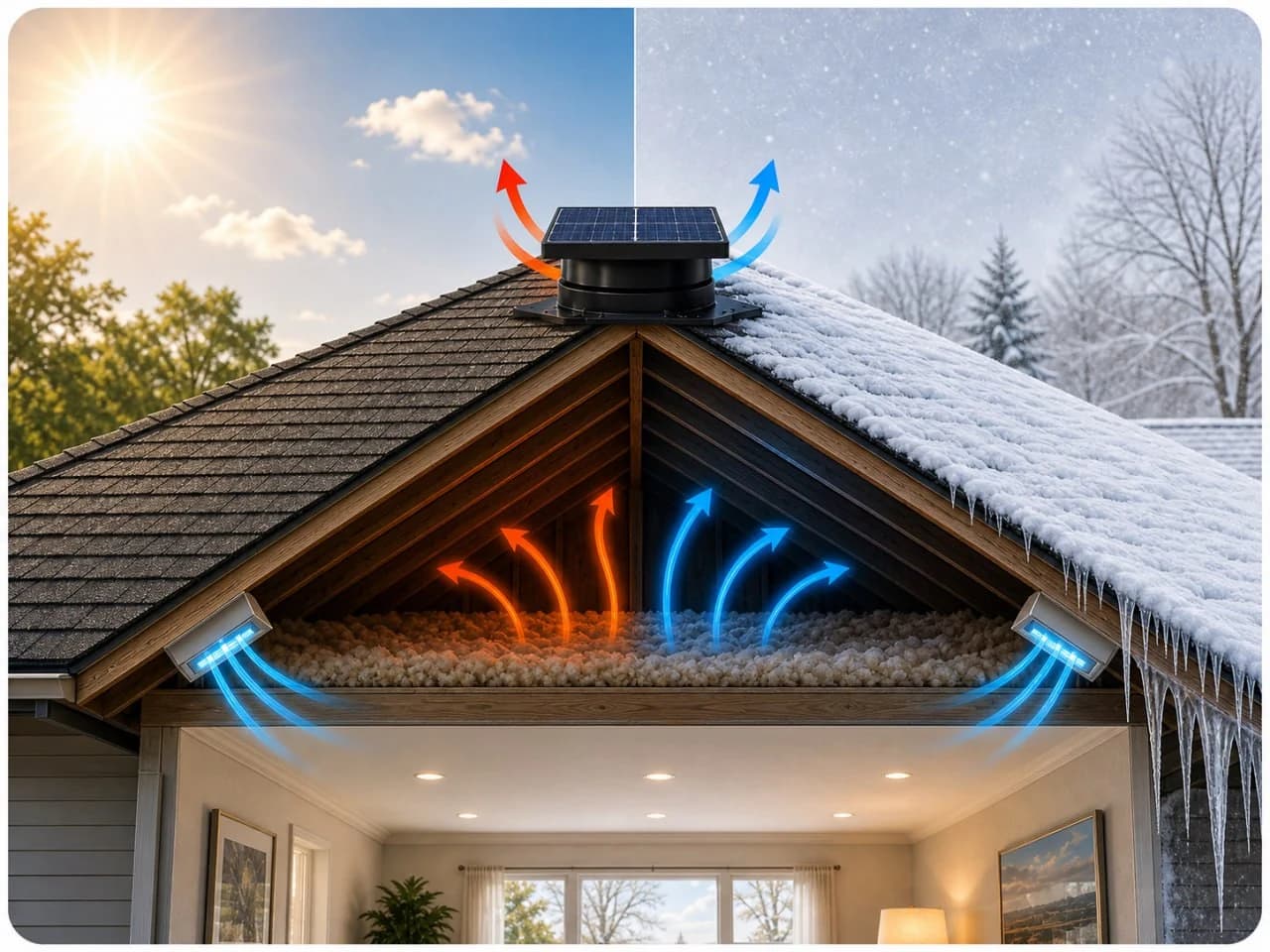
A solar attic fan handles both jobs. It pulls humid air out before it can condense and feed rot, and it moves the summer heat the deck does manage to absorb.
What we install
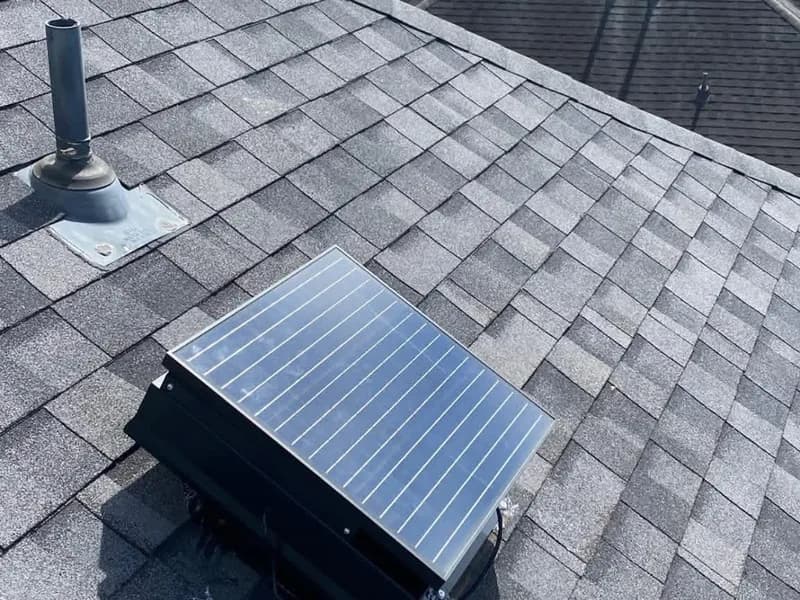
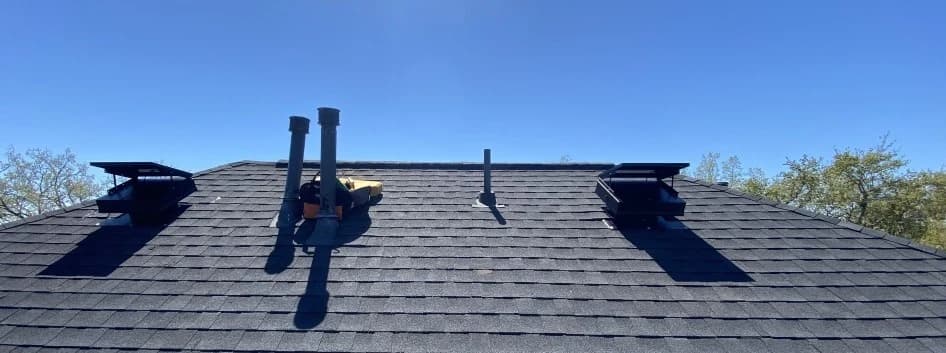
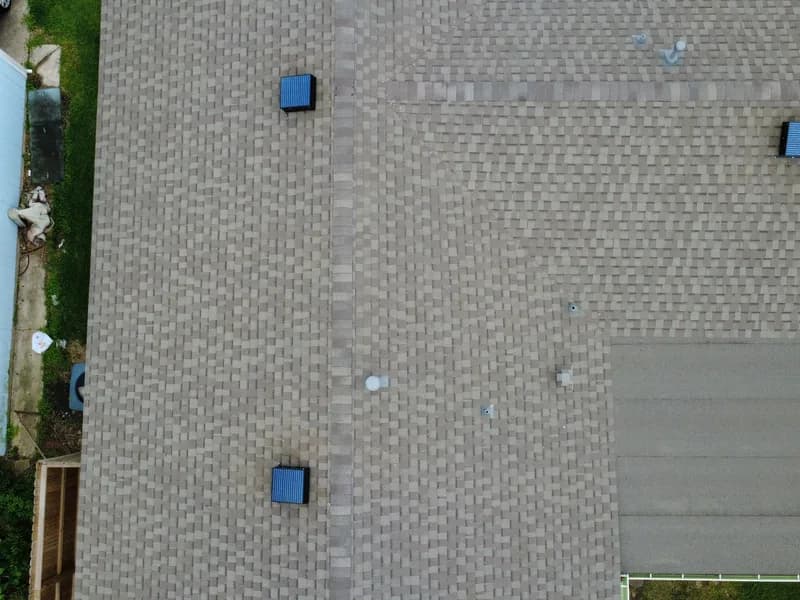
One 30W solar attic fan with the panel built into the housing and corrosion-resistant aluminum housing that lives well in salt air. The installer mounts it on the back slope where it stays hidden from the street and sheltered from the prevailing wind, cuts a clean opening, flashes it hard for Nor'easter wind-driven rain, runs a humidistat, and ties it off with stainless hardware. Professional install in a single visit. No electrician, no new circuit, no operating cost added to your bill.
What you'll save
The average Newfoundland and Labrador home uses about 14,500 kWh per year because electric baseboard heat is the dominant heating system. A typical summer power bill in St. John's sits near $130. Owners who install a solar attic fan usually see an 8 to 15 percent drop in summer cooling cost (per U.S. Department of Energy residential cooling-load guidance), but the real payoff here is avoided rot and avoided mold remediation, which runs $4,000 to $10,000 on the Avalon.
The 30 percent U.S. federal Residential Clean Energy Credit does not apply in Canada. Check takeCHARGE, the joint Newfoundland Power and Newfoundland and Labrador Hydro program, for current insulation and ventilation rebates.
Installed by Newfoundland authorized installers
St. John's building stock leans on 1800s and 1900s row houses around Jellybean Row and Quidi Vidi, postwar bungalows across Mount Pearl and Paradise, and newer builds in Conception Bay South. Most older homes have venting that predates modern insulation. Heritage rules across downtown St. John's and Old Mount Pearl can restrict street-facing roof equipment, and back-slope mounting clears them. You pick a date, the installer shows up, and your attic stops holding water.