Why Alaska attics need this
People assume an Alaska attic never gets hot. The summer sun says otherwise. In June and July, Anchorage gets about 19 hours of direct daylight, and Fairbanks gets close to 22. Outside temps stay mild, often 65°F to 72°F, but under dark asphalt shingles the sun has all day to keep pumping energy into the deck. Attic probes in Anchorage and Wasilla homes regularly read 115°F to 125°F by mid-afternoon in July, and the heat sits up there until almost midnight because the sun never really sets. Bedrooms on the upper floor stay warm long after the outside air has cooled, which is why so many homeowners across the Mat-Su Valley quietly run window AC units they never thought they would need.
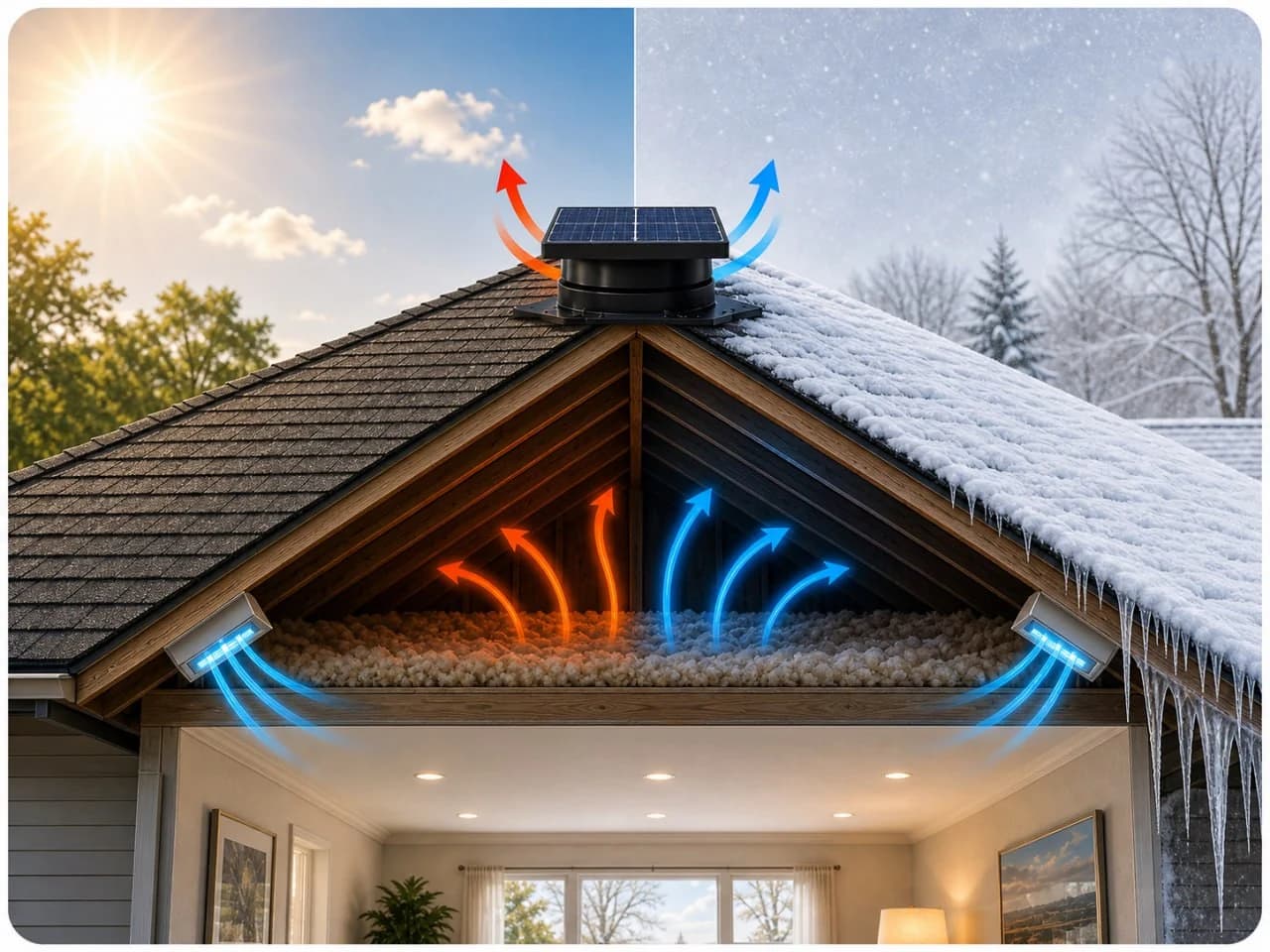
The winter side is the bigger fight. From October through April, indoor moisture from showers, cooking, and breathing rises into the attic and meets a roof deck that can sit below 0°F for weeks. It condenses, freezes, and slowly rots the sheathing. Heavy snow load on top of that traps everything in place. Ice damming along the eaves of Anchorage and Juneau homes is one of the most common winter repair calls.
A solar attic fan handles both jobs. In summer it moves hot air out of the deck through long daylight hours. In winter the panel produces whenever the sun clears the snow, pulling moist air out before it can condense on cold sheathing.
What we install
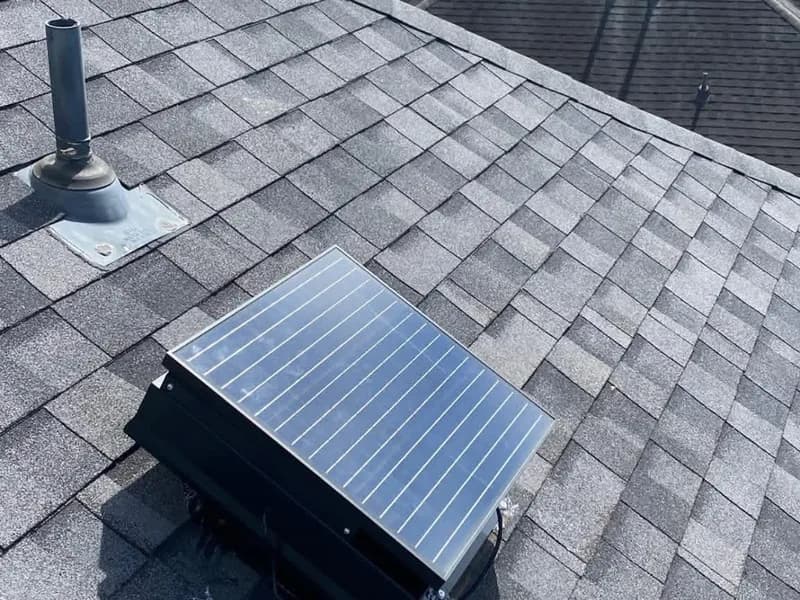
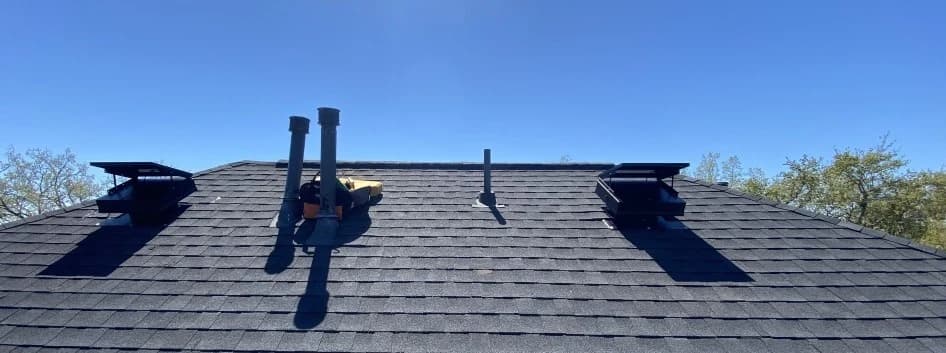
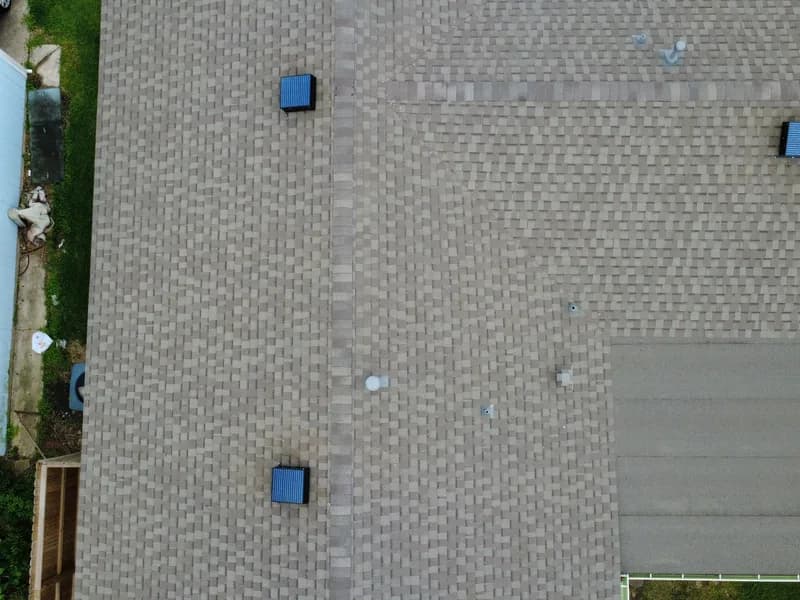
One 30W solar attic fan with the panel built into the housing, mounted on the back slope where it does not show from the street. The installer cuts a clean opening, flashes it for wind-driven snow and Cook Inlet rain, runs a thermostat and a humidistat, and ties it off. Professional install in a single visit. No electrician, no new circuit, no operating cost added to your bill.
What you'll save
The average Alaska home uses about 8,200 kWh per year on electricity, separate from the oil or gas that handles heating. A typical summer power bill sits near $120 in July. Owners who install a solar attic fan in Alaska usually see an 8 to 15 percent drop in summer cooling and ventilation load (per U.S. Department of Energy residential cooling-load guidance), but the bigger payoff here is winter. A dry attic means insulation that keeps working, less ice damming along the eaves, and shingles that last longer in the freeze-thaw cycle. Alaska homeowners qualify for the 30 percent federal Residential Clean Energy Credit on the installed cost.
Installed by Alaska authorized installers
Anchorage building stock is mostly 1960s to 1990s ranches and splits with modest soffit venting. Fairbanks runs colder and drier with more cabin and panel-built construction. Juneau is the wet outlier with constant Tongass humidity. Our installers default to back-slope placement, which keeps the unit invisible from the street and sheltered from the worst wind direction. You pick a date, the installer shows up, and your attic stops cooking through the midnight sun and stops sweating through the long winter.