Why California attics need this
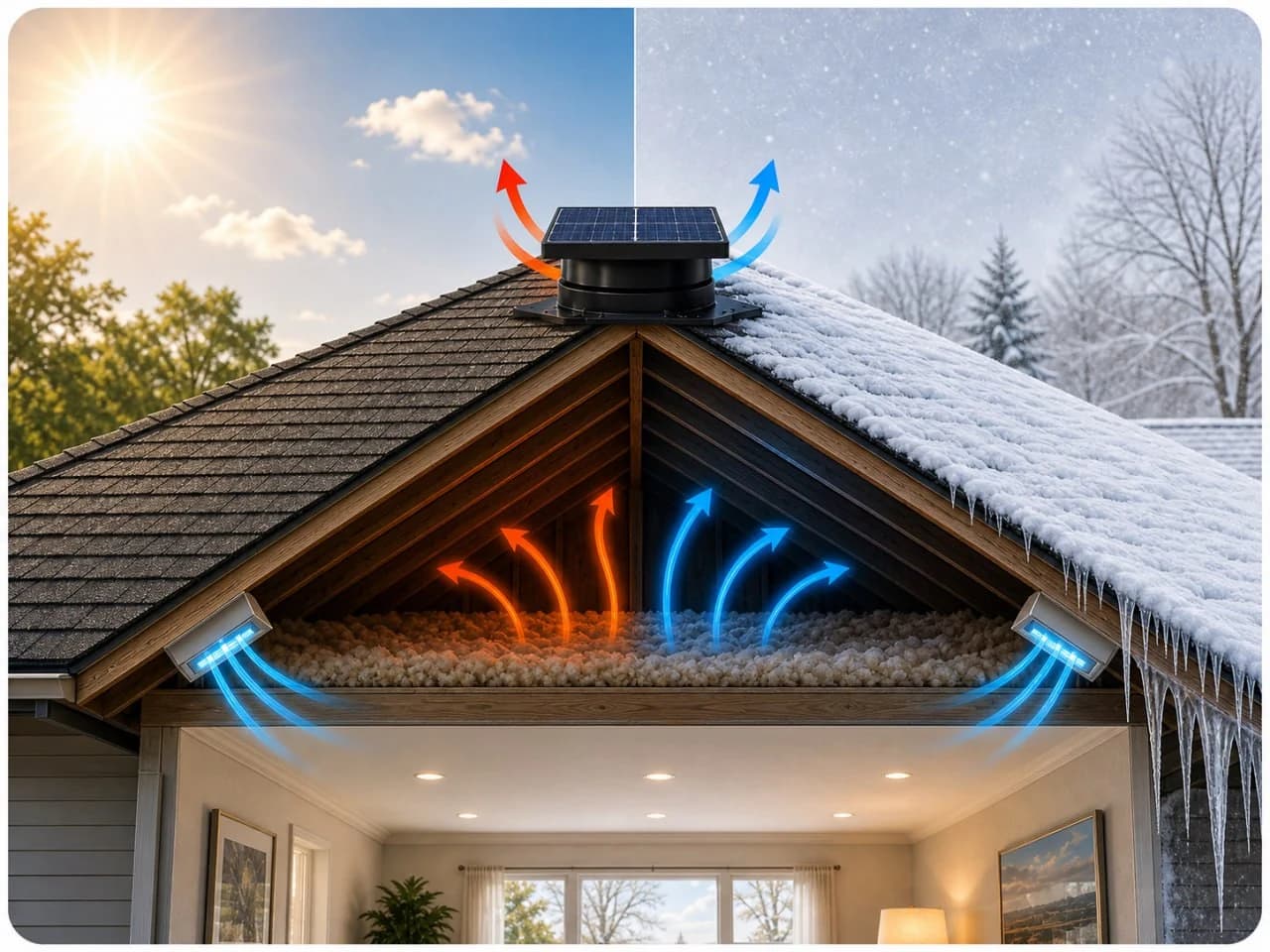
California is really two attic problems in one state. Along the coast in San Diego or West LA, the marine layer keeps the air around 75°F for most of the morning, but by 2pm the sun has burned it off and the attic above your living room has climbed past 120°F anyway. Inland it is a different story entirely. Sacramento, Fresno, and Bakersfield routinely sit at 100°F outside in July, and attic probes in Central Valley tract homes have read 135°F on the worst afternoons. That heat radiates down into the bedrooms all evening, long after the outside temperature has dropped.
The other thing California attics have to deal with is what blows in. Wildfire season now stretches from late spring into November in most of the state, and Cal Fire's defensible-space guidance keeps pointing back to the same weak point on a home: unprotected vents. Embers ride the wind, slip through a standard turbine or static vent, and land in the insulation. A solar fan with a fine-mesh bird and ember screen on the intake is doing two jobs at once, pulling trapped attic air out and screening what gets in.
What we install
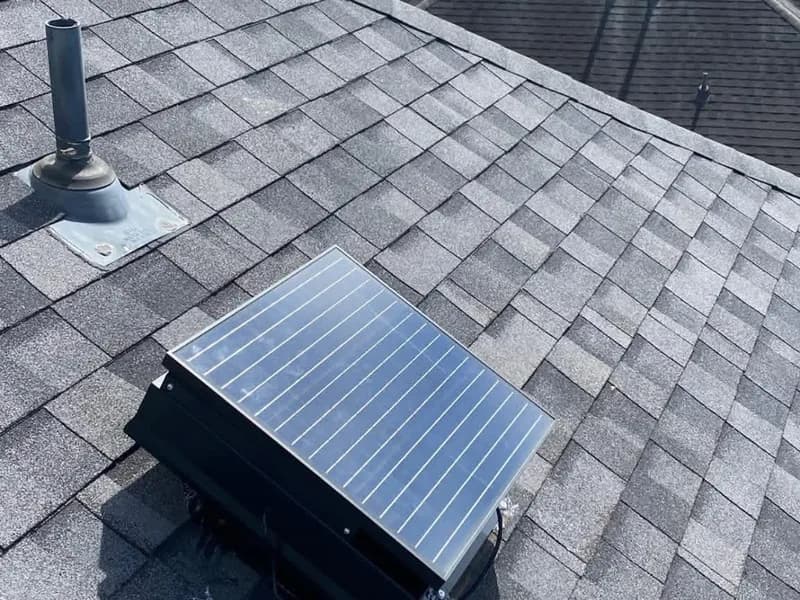
You get one 30W solar attic fan, sized for a California home, paired with an authorized installer who handles the install. The housing is UV-stabilized for inland Central Valley sun and the integrated grille is built as a fine-mesh ember screen, which matters more in California than it does in any other state we serve. The fan ships with mounting kits for asphalt shingle, concrete tile, and standing-seam metal, so the installer can match whatever you have up there, whether that is a 1970s tile roof in Riverside or a metal panel hill build in the Sierra foothills.
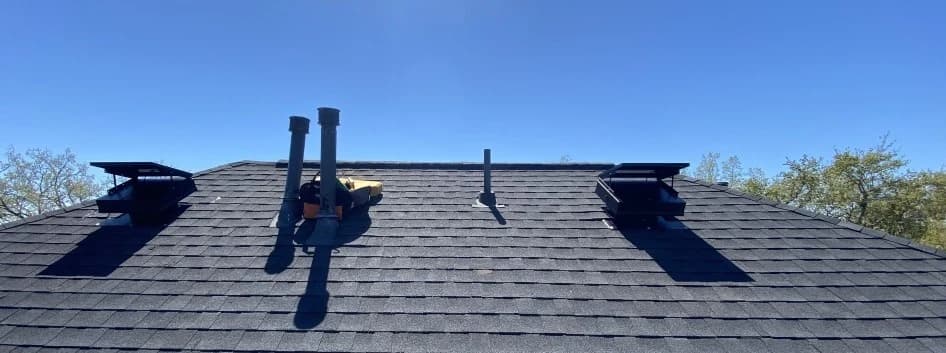
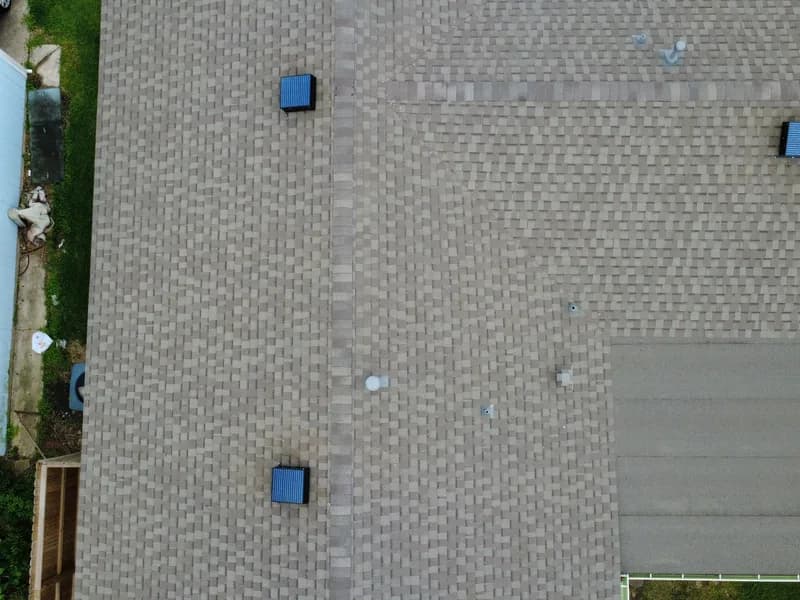
The installer mounts it on the back slope so it stays hidden from the curb, which also keeps it inside the HOA paint and line-of-sight rules common in newer San Diego and Inland Empire master-planned builds. They cut a clean opening, seal it, run a thermostat and a humidistat, and tie off the flashing. Professional install in a single visit. No electrician, no new circuit, no operating cost added to your bill.
What you'll save
The average California home uses about 6,800 kWh per year, well below Texas or Florida, because coastal Californians do not run AC eight months out of the year. The savings story is not raw kilowatt hours, it is when those kilowatts get pulled. PG&E, SCE, and SDG&E all run time-of-use plans now, and your most expensive electricity is the 4pm to 9pm window when peak rates kick in and your AC is fighting a 130°F attic.
Owners who put a solar attic fan on a California home usually see a 15 to 25 percent drop in summer cooling cost (per U.S. Department of Energy residential cooling-load guidance). On a $200 August bill, that is $30 to $50 back, and most of it is being clawed back from peak-rate hours specifically. The fan also helps your home hit and exceed Title 24 ventilation and envelope targets without adding any grid load, which is the angle that gets it past most HOA review boards on the first pass.
Real California install scenarios
Fresno, Woodward Park neighborhood. A 1990s stucco two-story with dark composite shingles and a long unbroken attic run over the second floor. The owner kept her thermostat at 76°F but the upstairs bonus room sat at 87°F until almost 10pm. Our probe read 132°F in the attic at 5pm on a 104°F July afternoon. The installer set the fan on the rear east-west ridge slope and added a humidistat. Within ten days the probe was reading 106°F at the same hour, and her July bill dropped from $238 to $179 once the peak-rate window stopped pulling the AC at full tilt.
Riverside, Mission Grove. A tile-roof ranch in a master-planned HOA community that bans visible roof equipment from any street-facing slope. The home backs onto open foothills inside a Cal Fire Local Responsibility Area, so the ember-screen grille was the deciding factor for the homeowner. Attic temp at install was 128°F in late August. We used a concrete-tile flashing kit so no tile cracked, placed the fan on the rear slope well below the ridge for HOA line-of-sight, and routed the placement plan through the architectural committee before the crew showed up. The owner texted two weeks later that the back bedrooms felt cooler at 8pm than the front of the house did at 5pm.
San Diego, Tierrasanta. A 1970s single-story with a low-pitched asphalt roof, the original gable vents, and a marine-layer pattern that keeps mornings cool but lets afternoon attic temperature spike fast once the sun burns through. Attic probe read 118°F by 3pm even with an outdoor temp of only 82°F. The owner was on SDG&E time-of-use and was watching her 4pm to 9pm bill climb every August. We placed the fan on the back slope facing south for the longest solar window. Her September SDG&E bill came in $46 lower than the year prior at the same usage.
Installed by California authorized installers
Newer master-planned HOAs in north San Diego County and the Inland Empire have placement rules so the unit cannot be seen from the front of the home. Our installers default to back-slope placement, which clears almost every HOA rule we have seen, and the fan ships with a fine-mesh ember screen that aligns with Cal Fire defensible-space guidance for vent openings. You pick a date, the installer shows up, and your attic stops cooking.