Why Nebraska attics need this
Nebraska sits right in the middle of tornado alley, and the same weather pattern that produces the supercells produces the attic problem. Omaha sits at 1,090 feet, Lincoln at 1,176, Grand Island at 1,860. Summer highs run 88°F to 95°F across the eastern half of the state, but the real story is the humidity rolling up from the Gulf and the sun cooking it through the shingles. Attic probes in Omaha and Bellevue regularly read 128°F to 135°F by 4pm in July. The humid plains air traps heat under the roof deck the same way a sealed greenhouse does, and afternoon storms break the heat for an hour before the sun goes right back to cooking. Tornado-spawning supercells run through every June, which means windows stay shut more days than open.
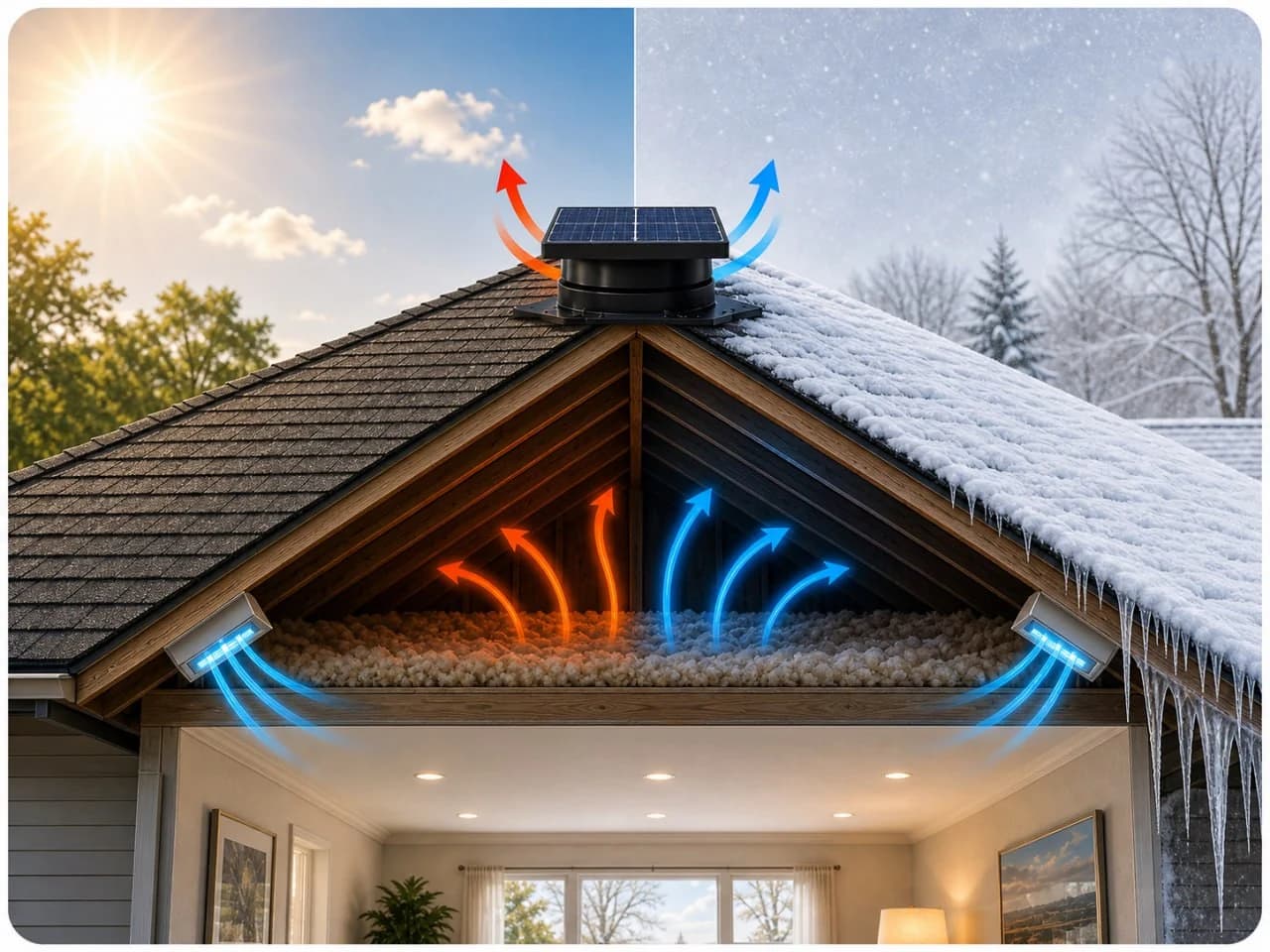
The other Nebraska story is the seasonal swing combined with hail. The same attic that hits 135°F in July hits 5°F in January, and Nebraska sits in the heart of the hail belt. Asphalt shingles installed in Lincoln or Kearney often need replacement at 13 to 16 years instead of 25, because they bake in summer, freeze through winter, and take a hail beating roughly every other season. Heavy winter snow load presses moisture into vents that were never built to handle it. Moving the hot humid air out in summer is the same fix that vents damp warm air in winter.
What we install
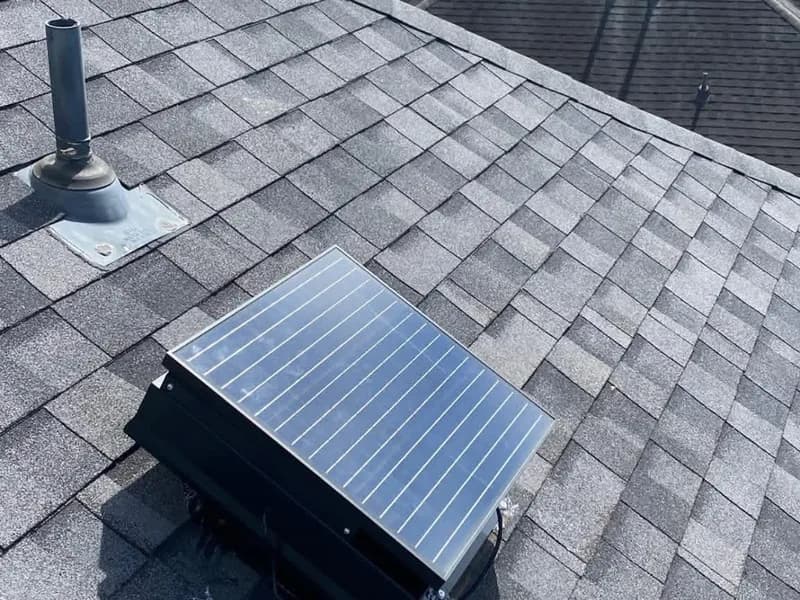
You get one 30W solar attic fan, sized for a Nebraska home, paired with an authorized installer who handles the install. The solar panel is built into the housing. The unit is UV-stabilized and the mounting hardware is rated for hail country.
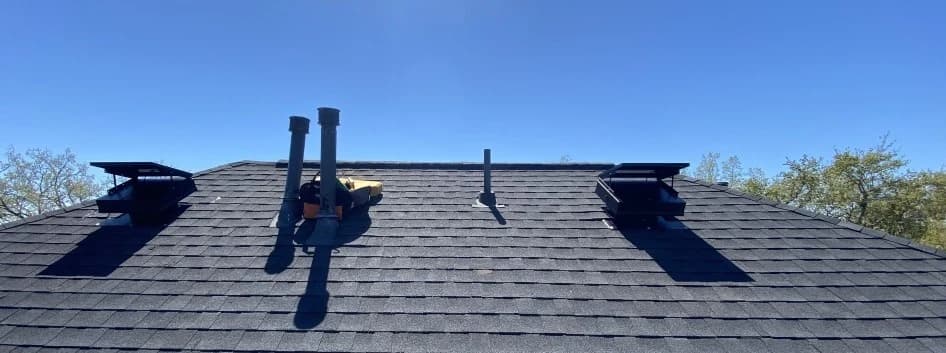
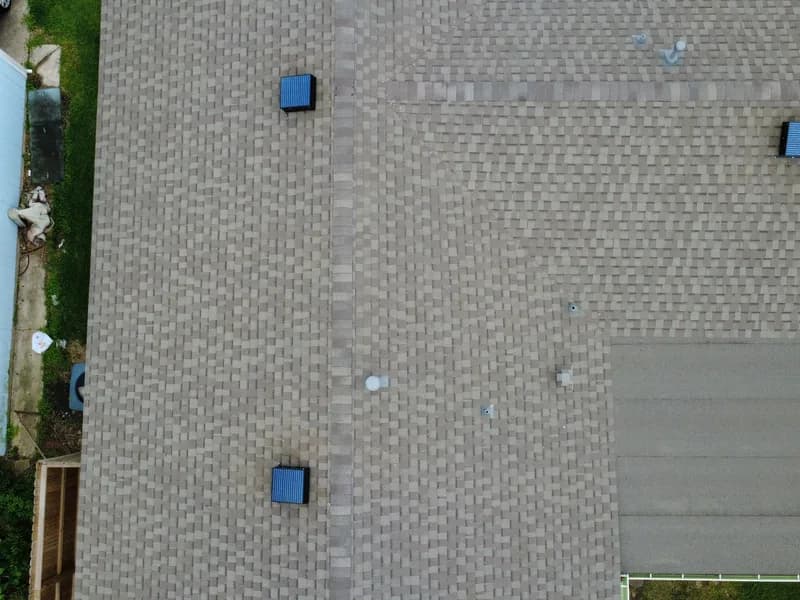
The installer mounts the unit on the back slope so it stays hidden from the street, cuts a clean opening, seals it for plains wind-driven rain and hail, runs a thermostat and a humidistat, and ties off the flashing with extra attention to storm uplift. Professional install in a single visit. No electrician. No new circuit. Sun hits the panel, the fan spins, hot humid attic air moves out.
What you'll save
The average Nebraska home uses about 11,000 kWh per year, well above the national average because summer cooling and winter heating both run hard. A typical summer power bill sits near $180 in July or August, and a lot of that is AC fighting the humid attic above the ceiling.
Owners who put a solar attic fan on a Nebraska home usually see a 12 to 22 percent drop in summer cooling cost (per U.S. Department of Energy residential cooling-load guidance). On a $180 August bill, that is $22 to $40 back. Across a Nebraska cooling season that runs roughly May through September, the math gets real. The longer-game payoff is the roof. Asphalt shingles often need replacement at 13 to 16 years because of the hail and the seasonal swing. Cool the attic dramatically and you buy years back before the next reroof. The same fan also vents damp warm air in winter, which is the difference between dry sheathing and rotten sheathing.
Real Nebraska install scenarios
Omaha, Dundee neighborhood. A 1920s brick tudor in the Dundee historic district off Underwood Avenue with original wood trim, a steep roof, dark architectural shingles installed in 2014, and full afternoon sun across the Missouri River bluff. The owner kept her thermostat at 75°F but the upstairs front bedroom hit 85°F by 5pm in late July with humidity over 70 percent. We pulled an attic probe reading of 132°F on a 92°F afternoon. The installer set the fan on the back slope so the Dundee streetscape stayed clean. Two weeks later the probe was reading 106°F at the same hour and the bedroom tracked the rest of the house within 2°F by sundown.
Lincoln, Near South neighborhood. A 1910s craftsman bungalow in the Near South historic district within walking distance of the Capitol with original soffit vents, low-pitched roof, dark composite shingles installed about 10 years ago, and brutal afternoon western sun. The attic was trapping 130°F by 4pm in early August. We mounted the solar fan on the back slope above the alley. The owner reported his August bill dropped from $208 to $164 and the upstairs became workable in the afternoon for the first time in three summers.
Bellevue, Twin Creek area. A 2000s two-story master-planned home on the south side of Bellevue with dark composite shingles installed in 2018 (after a hail replacement), an HOA that does not allow visible roof equipment from the street, and an attic that read 131°F on the install crew's probe in early August. We placed the fan on the rear-facing slope above the garage well below the ridge line so it stays invisible from the curb. The owner texted us a week later: the upstairs game room dropped from 85°F at 7pm to 78°F at 7pm and the AC stopped running through the night for the first time that summer.
Installed by Nebraska authorized installers
Nebraska building stock leans on 1910s craftsman bungalows in Lincoln's Near South, 1920s brick tudors in Omaha's Dundee and Field Club, postwar ranches across Grand Island and Kearney, 1980s splits around Papillion and La Vista, and rural farmhouses spread across the Platte and Sandhills country. Most rural farmhouses run on a single ridge vent that was never sized for the attic volume, and most older Omaha and Lincoln homes have at least one hail-replacement roof on the record. Many newer Bellevue and Papillion HOAs have placement rules about visible equipment. Our installers default to back-slope placement, which clears almost every HOA rule we have seen in eastern Nebraska. You pick a date, the installer shows up, and your attic stops cooking.