Why Nevada attics need this
Nevada is the driest attic story in the country, and it splits in two. The Las Vegas valley, Henderson, Summerlin, and Spring Valley sit on the floor of the Mojave, where July humidity often runs in single digits and the sun lands on a roof with nothing in the air to soften it. Valley probes routinely read 150°F to 155°F by 4pm on a 108°F day. That is not moisture-loaded heat the way a Gulf attic is. It is pure radiative load, and a Mojave roof deck holds it like a stone left in a fire pit. Up north around Reno, Sparks, and Carson City the air is even drier at 4,500 feet, and elevation UV is worse on shingles than down in Clark County, though the Great Basin gives you a 40°F day-to-night swing the valley never sees.
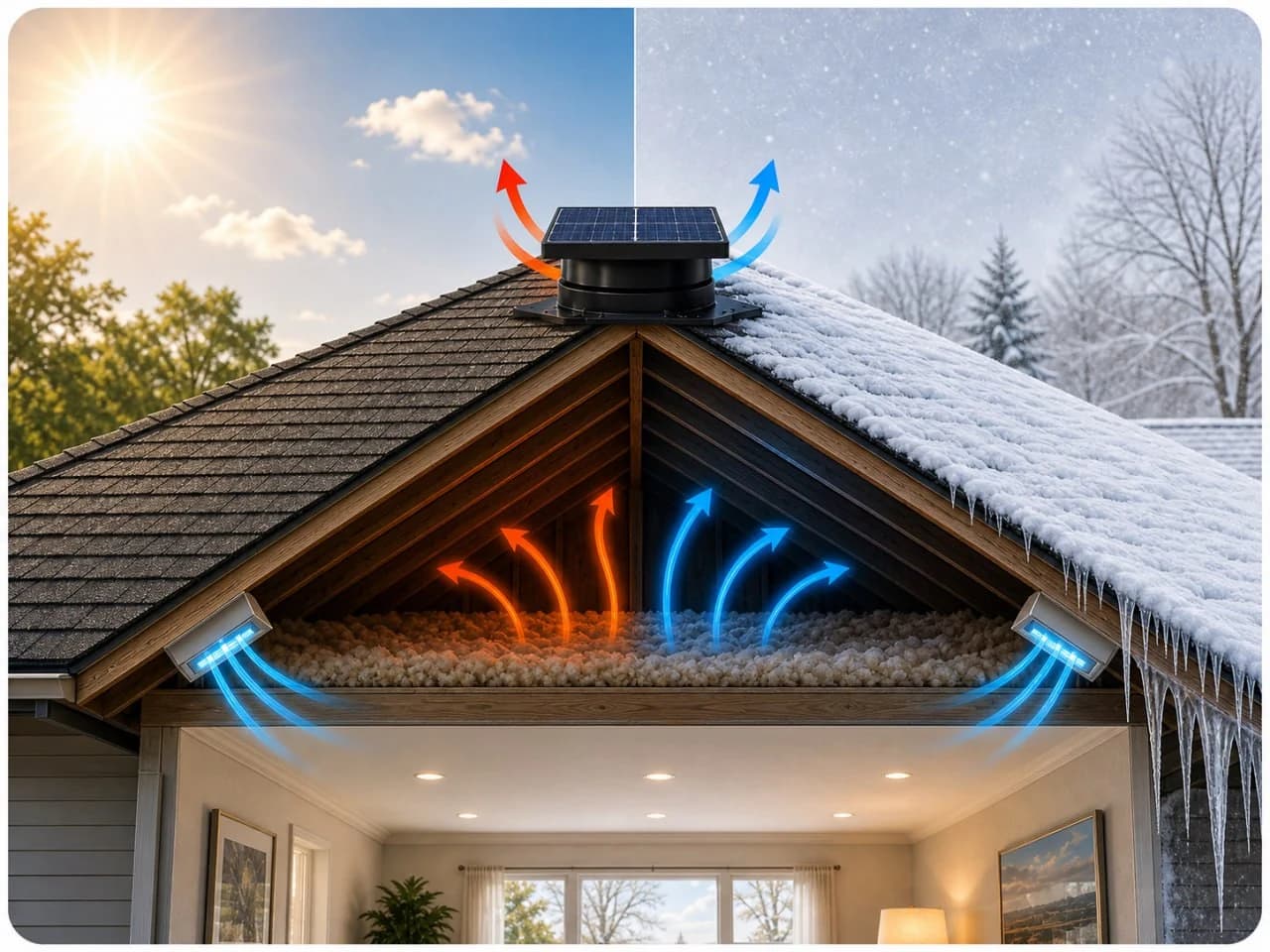
The trap is the same in both places. The Strip cools off after sundown, but residential attic insulation does not. A Summerlin two-story still has 130°F above the bedroom ceiling at midnight, and a Caughlin Ranch home in Reno holds heat through dinner after outside air drops into the 60s.
What we install
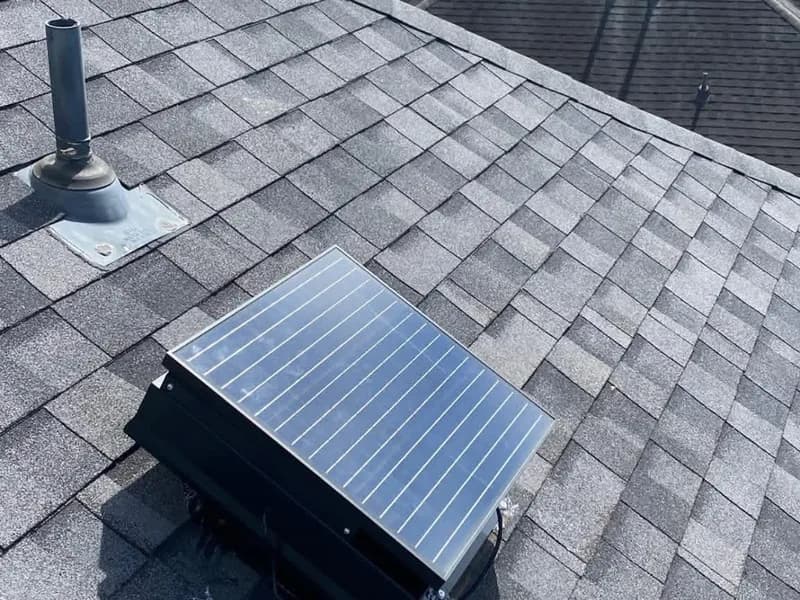
You get one 30W solar attic fan, sized for a Nevada home, paired with an authorized installer who handles the install. The solar panel is built into the housing. The housing is UV-stabilized for both elevation-amplified Reno sun and Mojave-floor Vegas sun, because cheap plastic vents in this state crack inside two summers. Most attic-vent failures on older Spring Valley and Sparks roofs are sun-destroyed turbine housings, not failed motors.
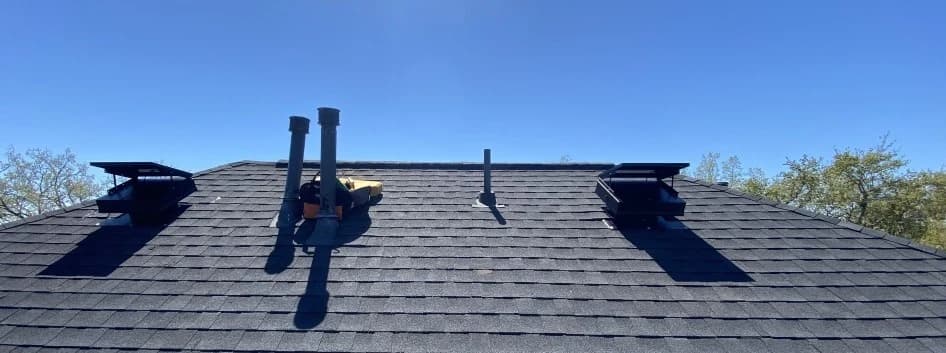
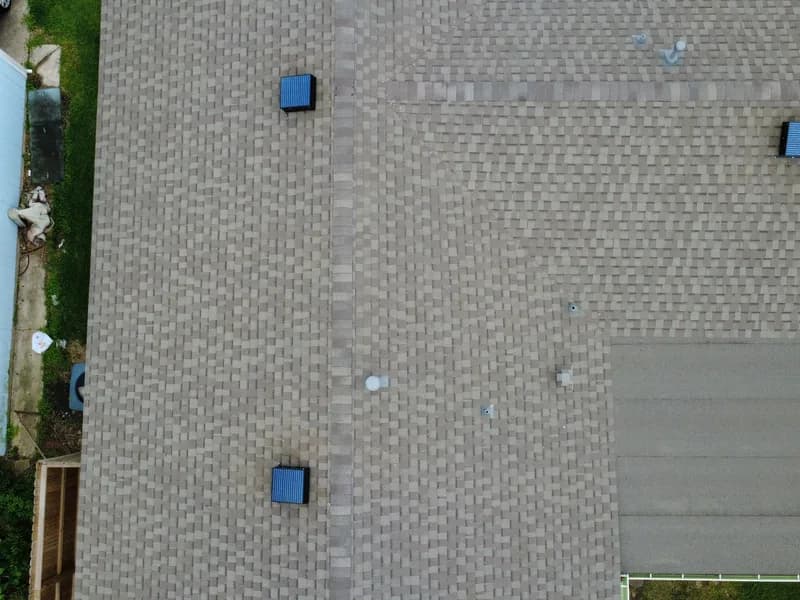
The installer mounts the fan on the back slope so it stays hidden from the street, which matters in Henderson Anthem and Summerlin where architectural committees run some of the strictest roof-equipment placement rules in the country. For Reno and Sparks installs we tie the mounting to the Washoe Zephyr wind that rolls down off the Sierra most summer evenings, a different conversation than calm Mojave-floor air. They cut a clean opening, seal it, run a thermostat and a humidistat, and tie off the flashing on asphalt or concrete tile. Professional install in a single visit. No electrician, no new circuit.
What you'll save
The average Nevada home uses about 9,500 kWh per year, lower than Texas or Florida, but stacked hard into the May-through-September window when NV Energy peak pricing lands. A typical summer bill in Las Vegas, Henderson, or Reno sits near $230 in July or August, and a lot of that is your AC pulling overtime to push cool air through a house whose attic is still radiating mid-afternoon heat at 9pm.
Owners who put a solar attic fan on a Nevada home see a 15 to 25 percent drop in summer cooling cost (per U.S. Department of Energy residential cooling-load guidance). On a $230 August bill, that is $34 to $58 back that month. The other angle Nevada owners notice is Lake Mead drought pressure. Every kWh shaved off cooling is one the grid did not pull from a watershed already running low. The longer-game payoff is roof life. Tile in Henderson and asphalt in North Las Vegas Aliante both cook from underneath, and dropping deck temperature dramatically buys real years back before warranty.
Real Nevada install scenarios
Las Vegas, Summerlin South. A 2008 stucco two-story with concrete tile, a Red Rock-facing back slope, and an HOA board that bans roof equipment visible from the street. The owner kept her thermostat at 77°F but the upstairs loft sat at 86°F at 10pm with the AC running hard, because the tile dome held 152°F at 5pm on a 109°F July day. The installer used a tile-specific flashing kit so no tile cracked, routed placement past the Summerlin committee, and set the fan well below the ridge. Within two weeks the probe read 118°F at the same hour, and the loft tracked the rest of the house within 2°F by midnight.
Henderson, Anthem. A newer master-planned home on a Black Mountain ridge lot with dark composite shingles and full-day western exposure that turned the garage bonus room into an oven by 4pm. Attic probe read 154°F on install day in early August, the worst valley reading we have logged this build year. Anthem will not approve anything that breaks the ridge line, so we placed the fan on the rear slope above the garage, kept it under the parapet sightline, and tied off the flashing for Mojave dust-storm wind. The owner texted a week later that the bonus room had dropped from 88°F at 7pm to 80°F, and her AC quit cycling past midnight.
Reno, Caughlin Ranch. A 1990s two-story in the foothills west of town with asphalt shingles and the full Washoe Zephyr coming off the Sierra most summer evenings. The owner's complaint was that the upstairs bedrooms sat at 82°F at 11pm even after outside air had dropped to 64°F, because elevation UV had cooked 144°F into the deck by 5pm and the insulation would not let it go. We tied the mounting to the Zephyr wind direction so the fan would not fight a crosswind, set it on the rear slope, and within ten days the bedrooms tracked the outside drop within 3°F by 10pm. His August NV Energy bill came in $51 lower year over year.
Installed by Nevada authorized installers
Newer Summerlin, Anthem, Spring Valley, and Somersett HOAs run architectural review boards with placement covenants so the unit cannot be seen from any street-facing slope. Our installers default to back-slope placement, which clears almost every covenant we have seen. Reno and Sparks installs get Washoe Zephyr wind-rated mounting tied to the Sierra eastern slope.