Why North Carolina attics need this
North Carolina is really three attic problems stacked inside one state line, and the fix has to read each zone differently. Up in the mountains around Asheville and Boone the summer is shorter and the elevation knocks several degrees off the worst afternoons, but heavy shade traps moisture and the cooking that does happen quietly eats years off a shingle roof. Across the Piedmont, Charlotte and Raleigh and Greensboro sit in a heat-island belt where pavement, low tree gaps over newer subdivisions, and 88°F July highs combine to push attic probes to 130°F and 135°F by 4pm. Then on the Coastal Plain around Wilmington and New Bern, the Atlantic pumps wet salt air over the roof from June through October, and once every few years a hurricane edge like Florence in 2018 reminds owners that coastal mounting is a different conversation than inland mounting.
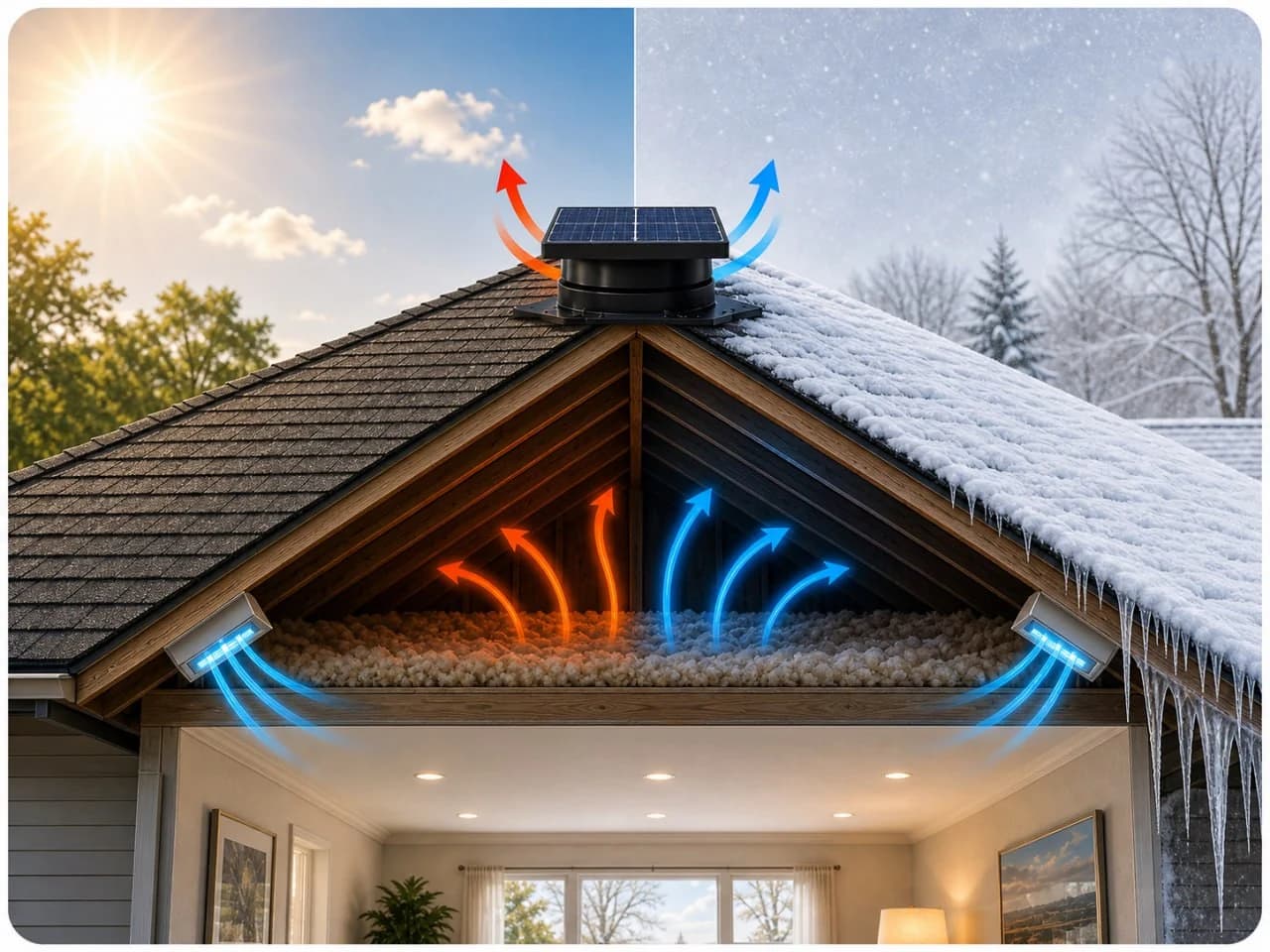
What ties all three zones together is the same trapped attic. Hot wet air radiates down through the ceiling drywall into the bedrooms, condenses on the cold side of your AC ducts, and feeds mildew on the joists. Insulation slows that load. It does not move it. The fix is to push it out with the sun.
What we install
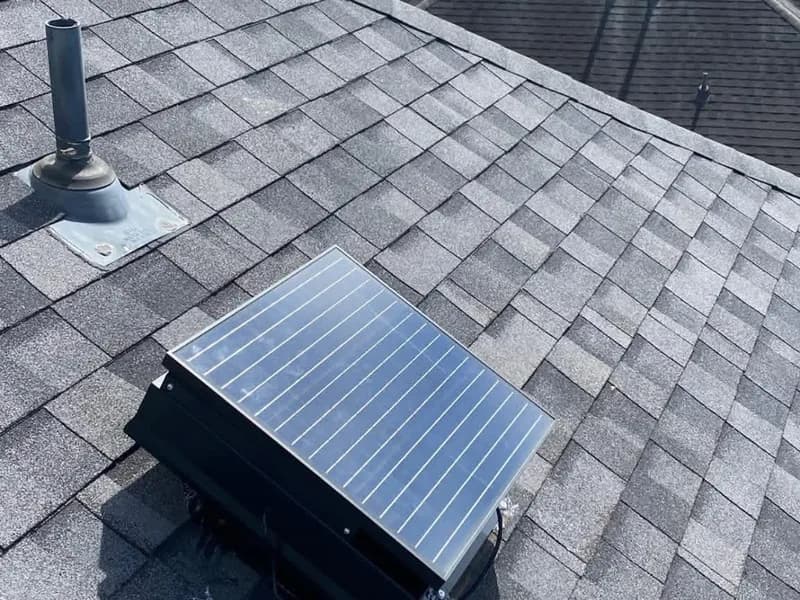
You get one 30W solar attic fan, sized for a North Carolina home, paired with an authorized installer who handles the install. The solar panel is built into the housing. The motor is sealed against humid Piedmont and coastal air so it does not corrode out the way a cheap turbine motor does after two Carolina summers. For Coastal Plain installs we swap in hurricane-rated mounting hardware tied to the wind zone the home sits in, anywhere from Wilmington up to the Outer Banks. For Piedmont and mountain installs the standard mounting kit is the right call.
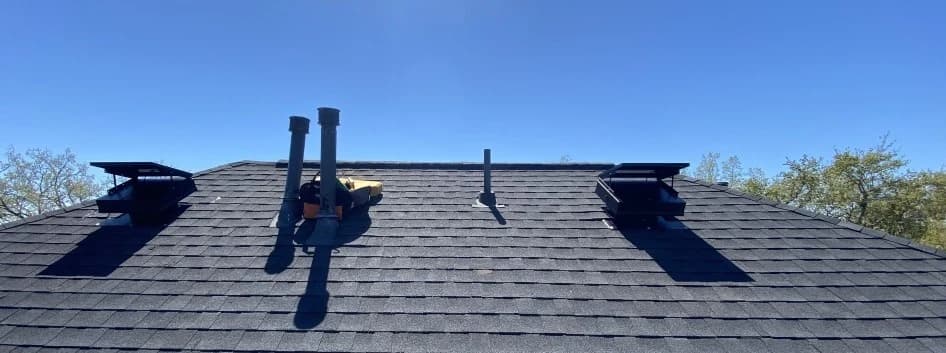
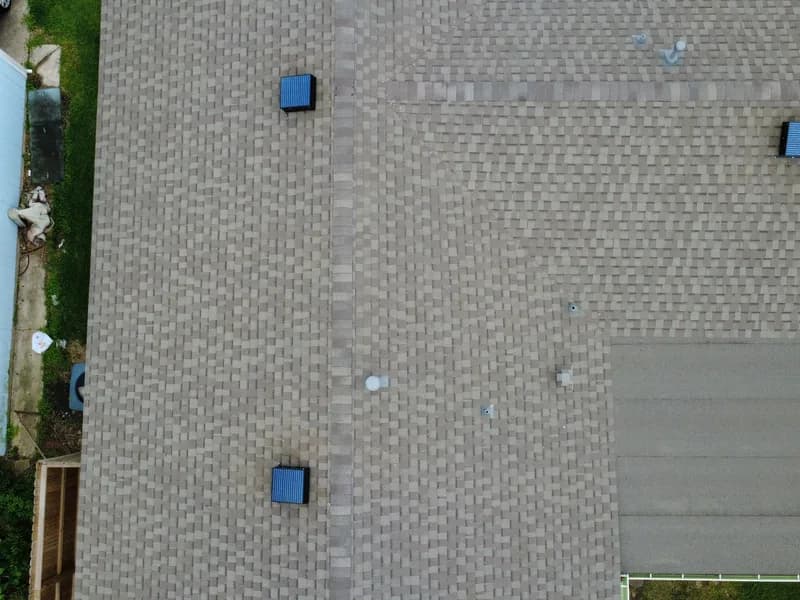
The installer puts it on the back slope so it stays hidden from the curb, which also keeps it inside the architectural review rules common in the newer Cary, Apex, and Holly Springs HOA communities south of Raleigh. They cut a clean opening, seal it for wind-driven thunderstorm rain, run a thermostat and a humidistat, and tie off the flashing. Professional install in a single visit. No electrician, no new circuit.
What you'll save
The average North Carolina home uses about 12,600 kWh per year, with the load stacked from May through September across the Piedmont and into October along the Coastal Plain. A typical summer power bill in Charlotte or Raleigh sits near $200 in July or August, and a real share of that is your AC fighting wet attic heat coming down from above.
Owners who put a solar attic fan on a North Carolina home usually see a 15 to 25 percent drop in summer cooling cost (per U.S. Department of Energy residential cooling-load guidance). On a $200 August bill, that is $30 to $50 back that month. The pitch changes by zone though. In the Piedmont the energy savings is the headline. In the shaded mountain counties the bigger win is roof life, because a shaded attic still cooks moisture into the deck plywood and a moving column of air pushes the replacement window out by years.
Real North Carolina install scenarios
Charlotte, Myers Park neighborhood. A 1950s brick traditional in the urban heat-island core south of uptown, with original soffit vents and dark architectural shingles. The owner kept her thermostat at 75°F but the upstairs bedroom over the garage sat at 85°F by 6pm, and her July Duke Energy bill had climbed to $241. Attic probe read 134°F at 4pm on an 89°F afternoon. The installer placed the fan on the back slope where the late-day sun window was longest, added a humidistat, and within ten days the probe read 108°F at the same hour. Her August bill came in $47 lower than July.
Wilmington, Forest Hills. A 1940s coastal bungalow about three miles inland from the Cape Fear River, with a low-pitched asphalt roof and wet Atlantic air rolling in every afternoon. The owner had ridden out the Florence remnants in 2018 and was specific about hurricane-rated mounting before the crew showed up. Attic probe read 128°F on a 90°F July day, and the master closet had started to smell musty. We used coastal-grade mounting hardware tied to the local wind zone, set the fan on the rear slope, and the humidistat carried most of the work. The closet smell was gone by week one and her August Duke Progress bill dropped $38 year over year.
Cary, Preston. A newer master-planned home in a Wake County HOA that bans visible roof equipment from any street-facing slope, with an attic that read 131°F on the crew's probe in early August. The complaint was not the day, it was the night. The upstairs bonus room sat at 82°F at 11pm with the AC running hard, because the Triangle tree canopy that cools older Raleigh neighborhoods like Five Points and North Hills does not exist yet over a 2018 subdivision. We routed placement past the Preston architectural committee, set the fan on the rear slope above the garage well below the ridge, and the owner texted a week later that the bonus room finally hit thermostat setpoint before 10pm.
Installed by North Carolina authorized installers
Newer Cary, Apex, and Holly Springs HOAs south of Raleigh have strict placement rules so the unit cannot be seen from any street-facing slope. Our installers default to back-slope placement, which clears almost every HOA rule we have seen. Coastal homes from Brunswick up through Dare get hurricane-rated mounting tied to the wind zone.